
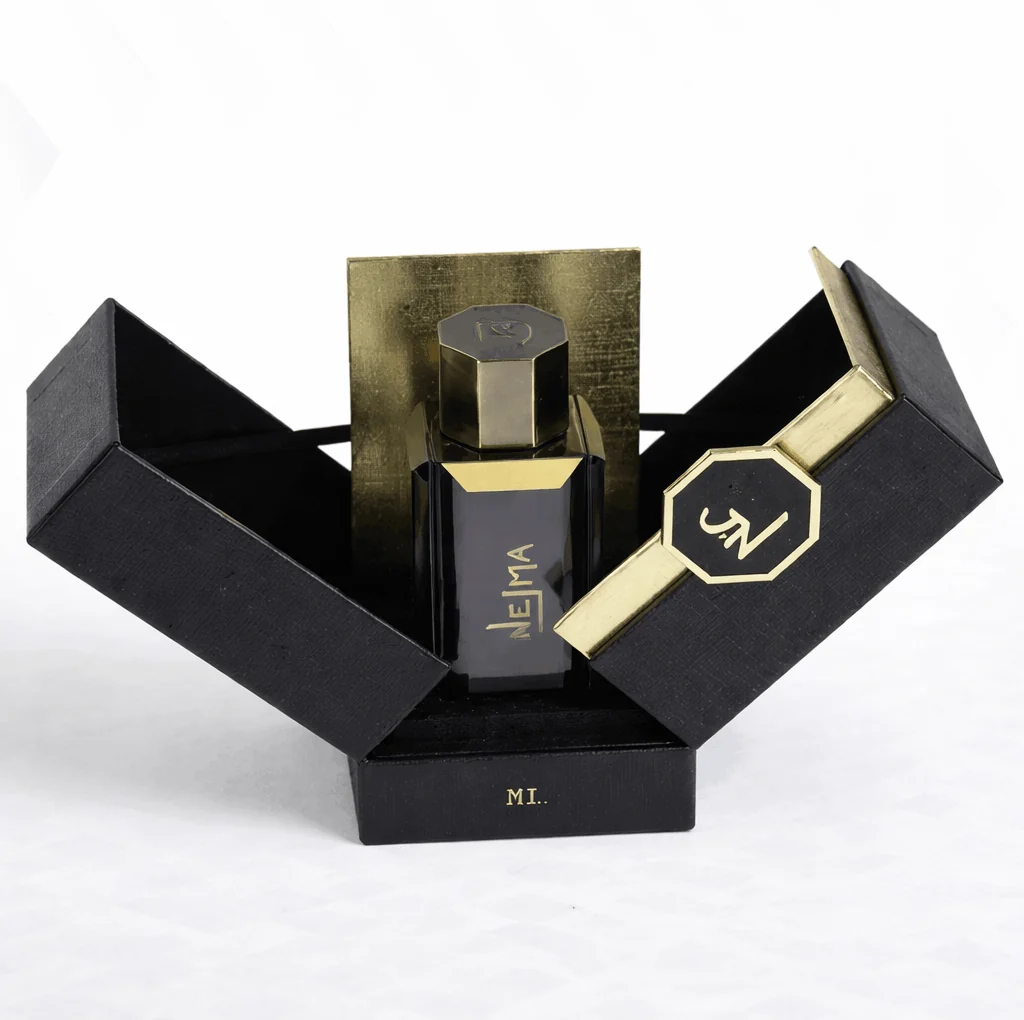
01
Custom Presentation Box Manufacturing
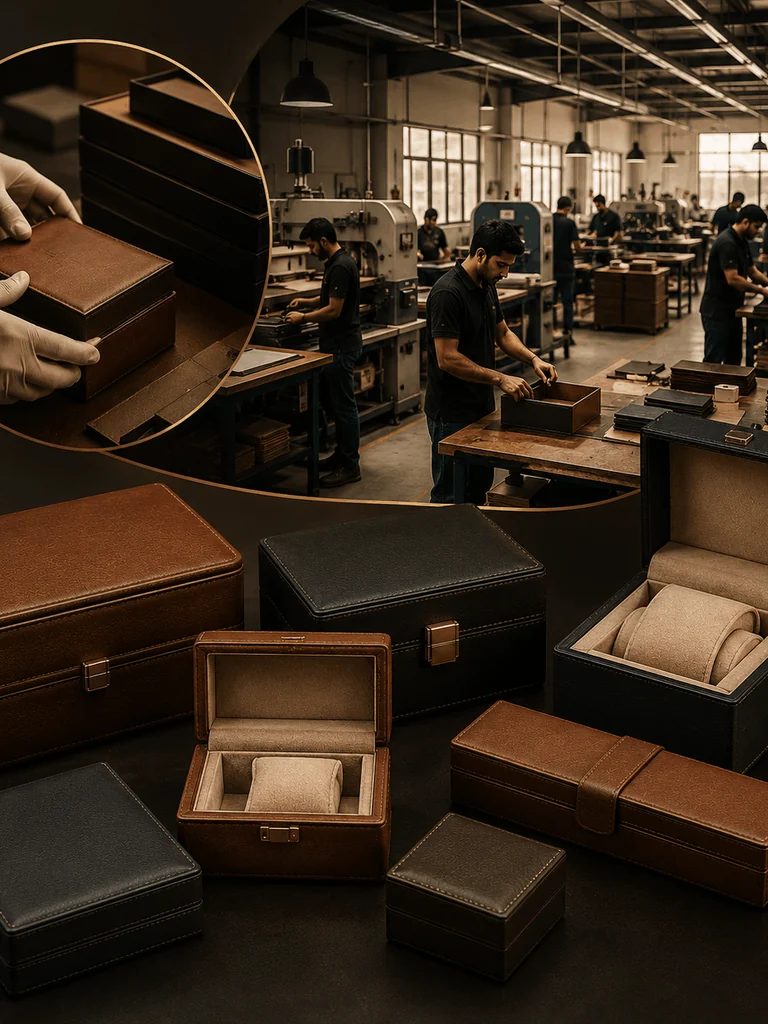
Boards cut, creased and wrapped, corners assembled square, inserts fitted and the box built to open the way the drawing shows.
Discuss This ServicePresentation Box Manufacturer in Dubai, UAE
Nivada Box is a presentation box manufacturer in Dubai, UAE specialising in rigid reveal boxes, windowed presentation packaging, tiered and multi-item inserts and inside-lid branding for launches, awards and corporate gifting.
The Reveal, Not the Shipping
A presentation box is judged on the moment it opens, not on how it survives the courier. If the lid drags, the product sits too deep to see, or the brand is only printed outside, the reveal has already failed before anyone says anything about quality.
That is why a presentation box is specified from the opening sequence backwards. How is it held — in one hand or two? Does the lid lift clear or hinge open? How far above the tray does the product sit, and where does the eye land first? Each of those answers sets the board caliper, the lid proportion and the insert height, and all three have to agree with each other.
As a presentation box manufacturer in Dubai, UAE, Nivada Box builds these boxes in our own Dubai facility, so the structure, the insert and the decoration are decided together. You approve a real assembled sample — not a drawing — before we produce the run.

Box Styles
A presentation box is defined by how it opens and where the product sits inside it — not by its footprint. These are the structures we build most often.
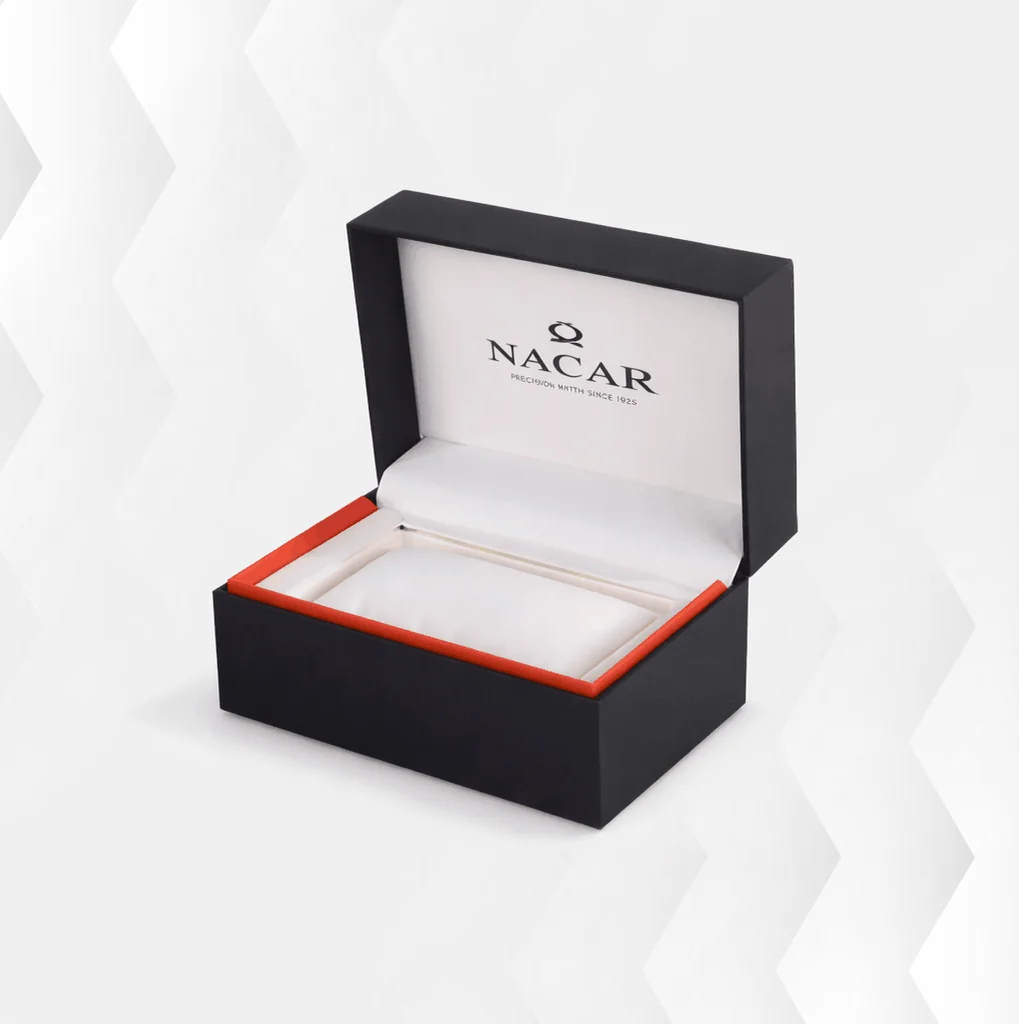
The dependable build for a product launch or an award — a square lid that lifts true and an insert cut to the product's own profile, so the reveal looks the same on box fifty as it did on the sample.
View Product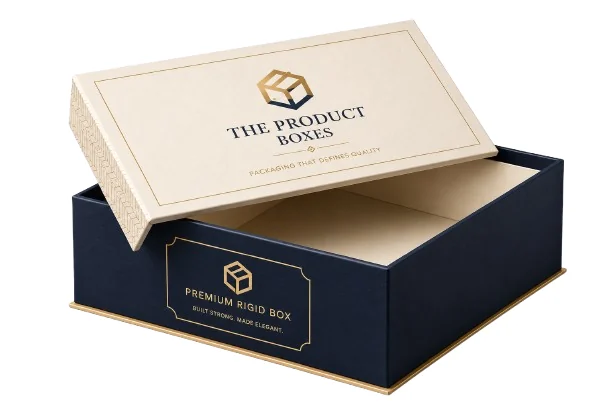
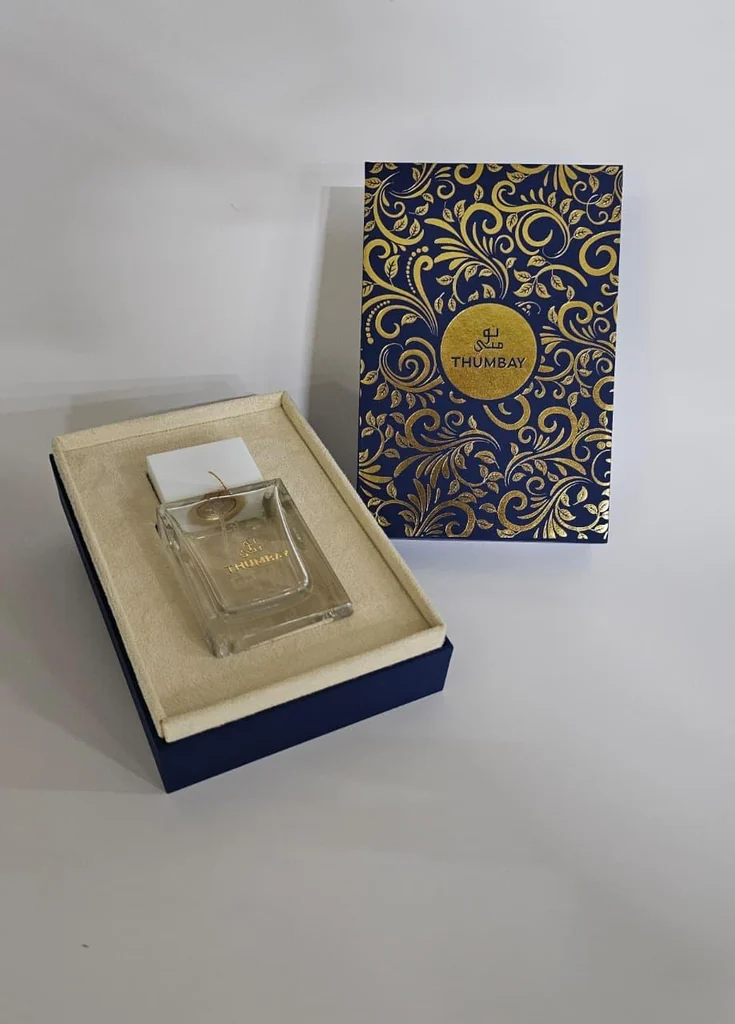
A bottle or jar presented upright in a folded tray, with the clearance set so the product clears the lid line and is visible the moment the box opens.
View Product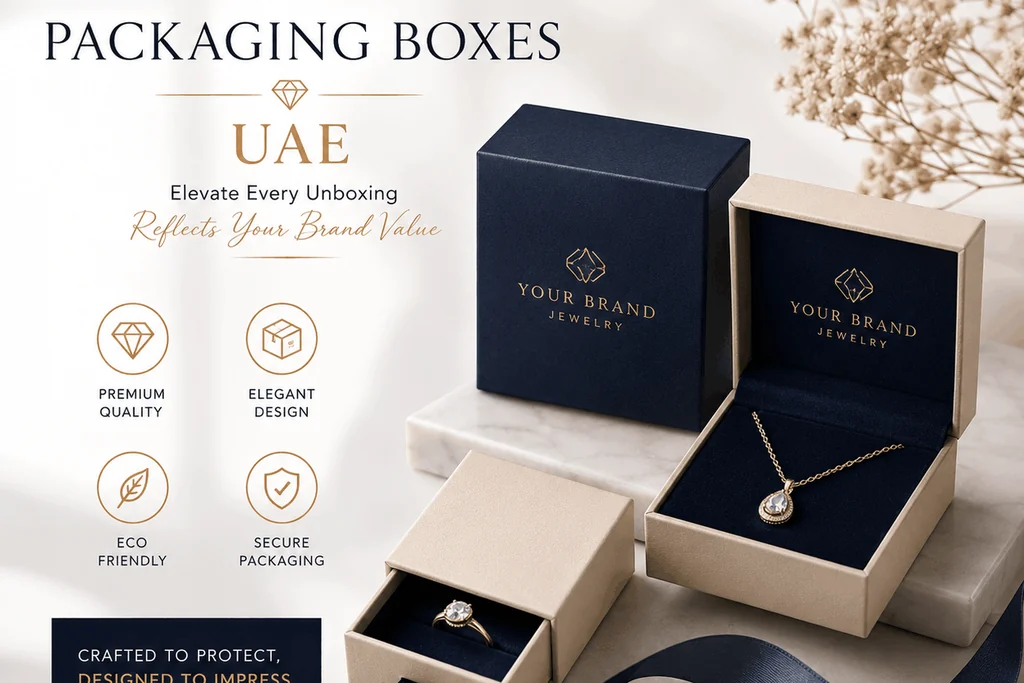
A die-cut window or an open front that shows the product before the box is touched, and an insert cut to the item so nothing shifts when the lid comes off.
View Product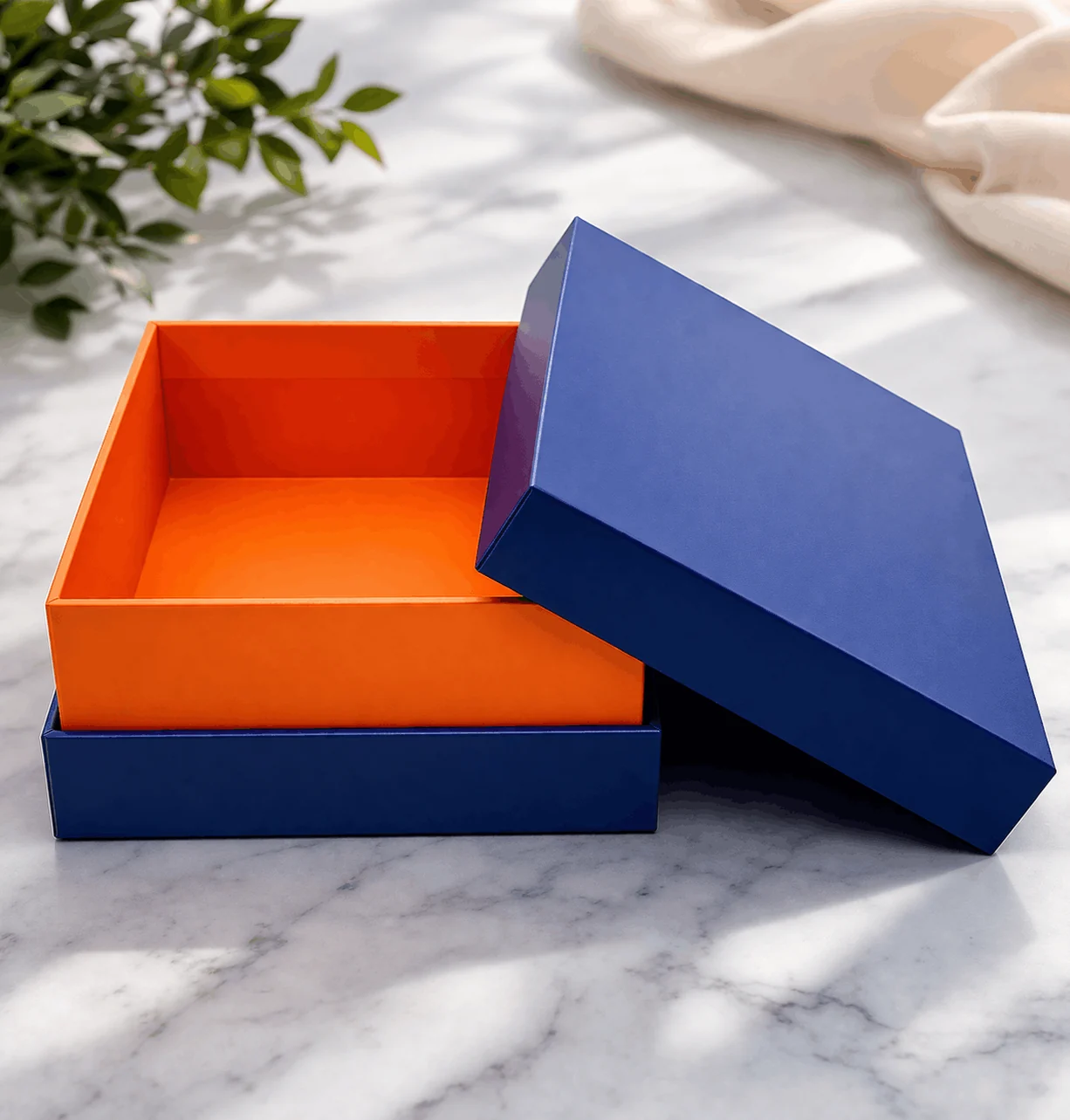
A tiered riser or a stepped tray that lifts each product to its own level, so a multi-item presentation reads clearly instead of disappearing into one cavity.
View Product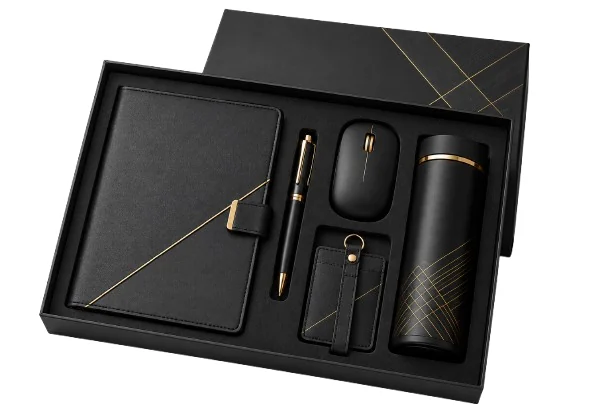
A board tray with a cut-out per item for a welcome kit or onboarding box, built to arrive flat-packed or assembled depending on how your team will use it.
View Product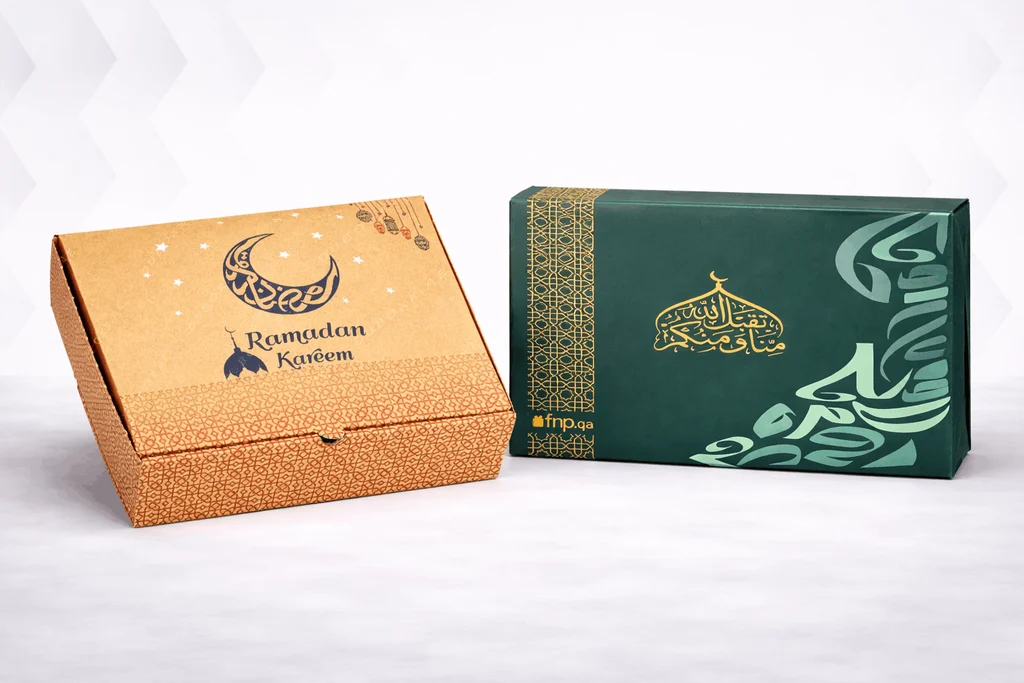
A textured wrap or leatherette over greyboard, with the branding debossed into the inside lid so it is the first thing seen when the box is opened.
View Product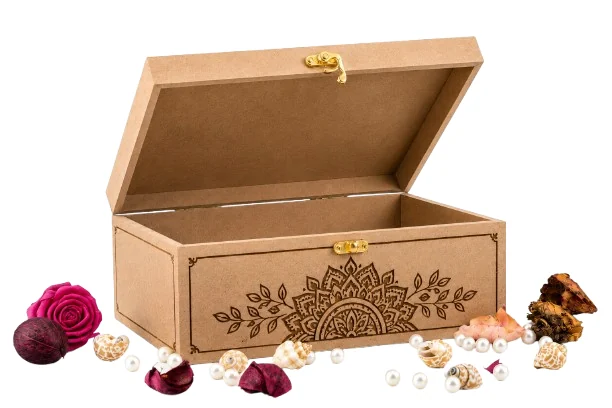
MDF or solid wood for a build that is meant to be kept, with a routed rebate giving a close-fitting lid and a clean reveal line.
View Product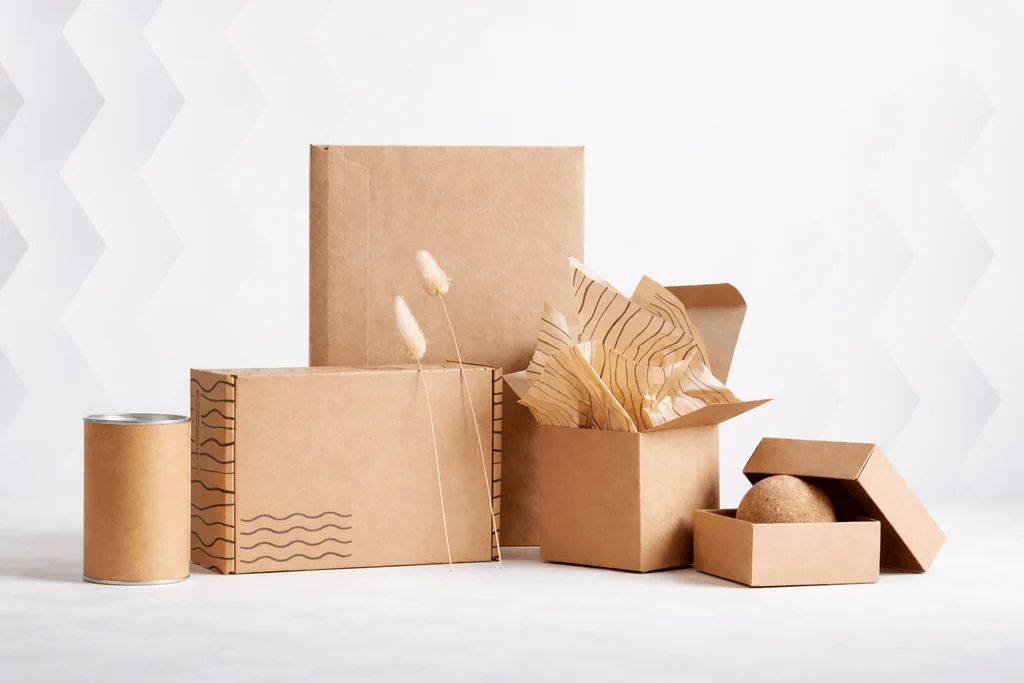
Built to a launch or event date, with a printed outer sleeve adding the campaign layer while the rigid inner box carries the product.
View Product
A food-safe board and insert for a premium selection, with the tray height set so the contents present as a set rather than a pile.
View Product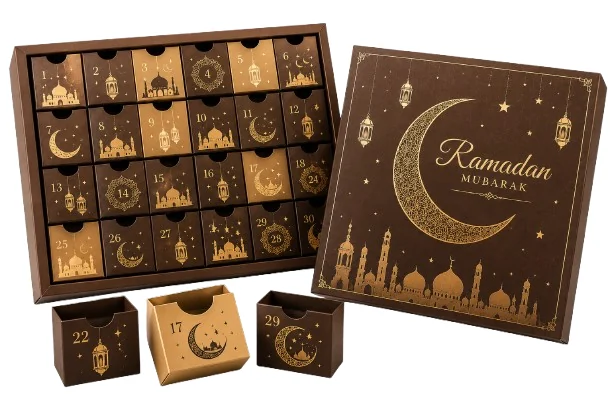
A seasonal build with a foil-stamped lid and a themed insert, produced against the date the set needs to be in hand.
View Product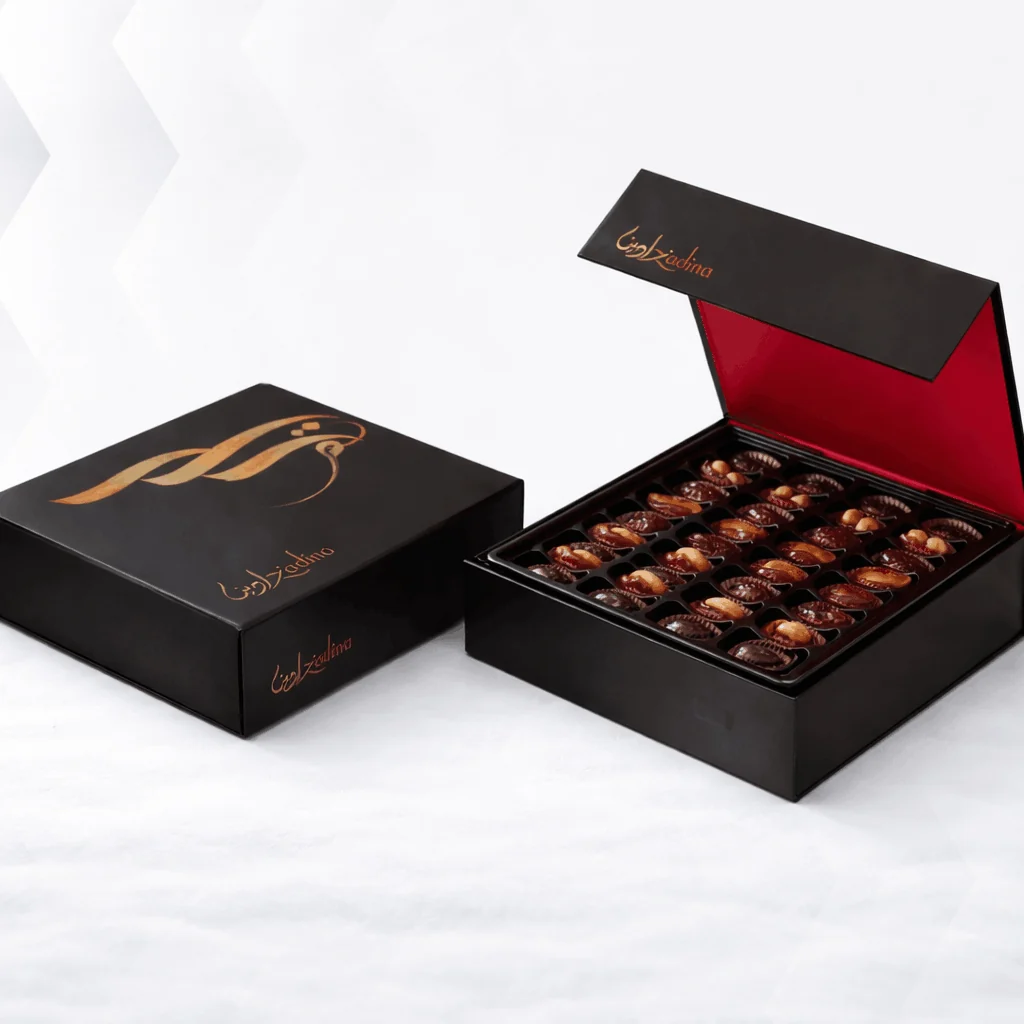
A presentation folder or box for certificates and awards, with a mounted plaque carrying a name or title at a fixed position on the board.
View Product
A printed folding structure that ships flat and folds to a square edge, giving the look of a rigid box at a lower landed cost for large runs.
View ProductStructure
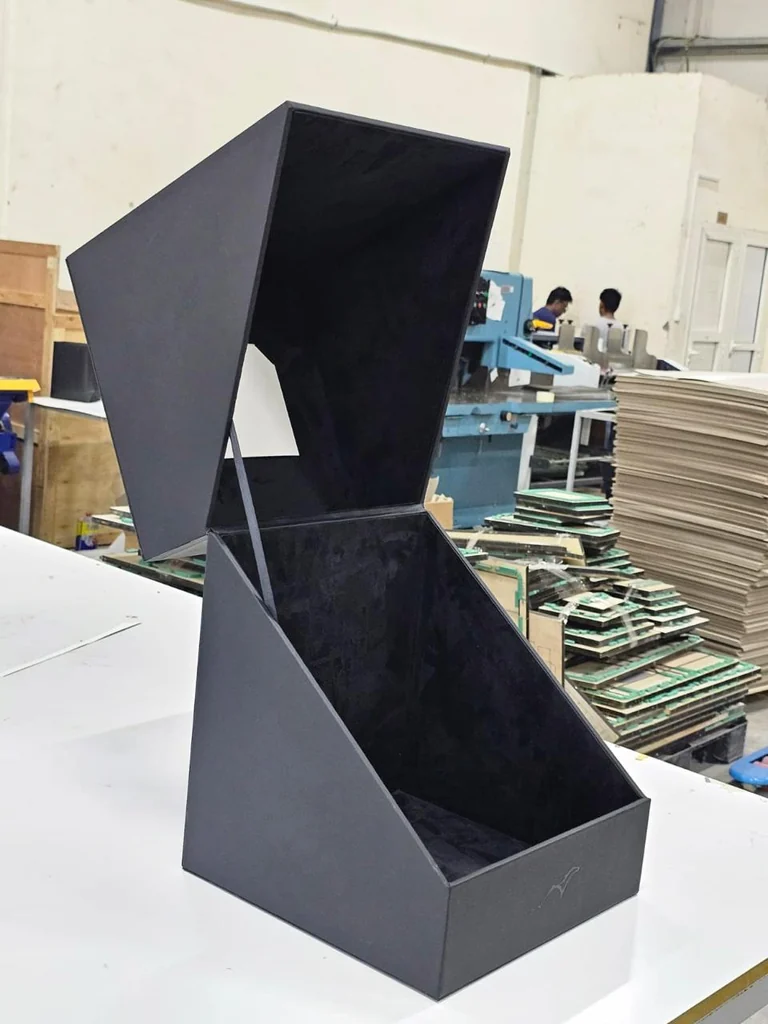
Every presentation box is drawn around the opening sequence before it is sampled. Board is cut and creased in-house, the insert is cut to the product profile, and the decoration is applied to the surface the customer actually sees.
Capabilities
The same floor cuts the board, builds the insert and applies the finish, so a change to the reveal does not mean moving the job to another supplier.
Rigid two-piece boxesFolding cartonsFoam insertsMoulded pulp insertsFolded board traysDie-cut windowsFoil stampingSpot UV
Boards cut, creased and wrapped, corners assembled square, inserts fitted and the box built to open the way the drawing shows.
Discuss This Service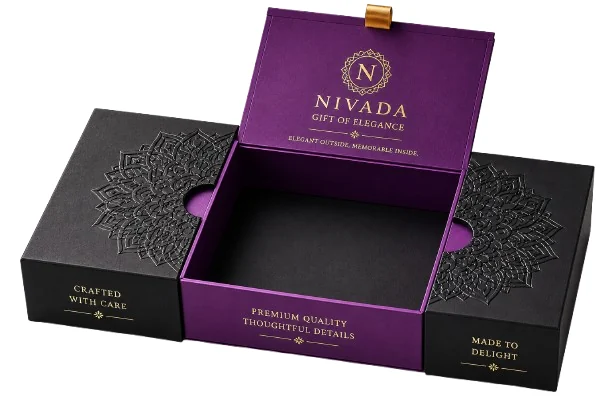
A dieline, a section through the lid and a sample, so the opening sequence is agreed on paper and in the hand before tooling cost is committed.
Discuss This ServiceA foam cradle, a folded tray or a tiered riser, cut to the item so it presents the same way every time the box is opened.
Discuss This Service
Foil stamping, blind and foil embossing, debossing and spot UV, inside and out, matched to the artwork rather than guessed at.
Discuss This ServiceBrand colour matched to your file or a physical reference and confirmed on a printed sheet, so the shade is settled before the run.
Discuss This ServiceProduction planned backwards from your date, packed to your shipping format and delivered across the UAE.
Discuss This ServiceThe Case
Insert height and lid clearance are set so the product is visible the instant the lid lifts, not buried under a wall.
Square corners, a close lid line and a fitted tray make the opening look deliberate rather than assembled in a hurry.
The inside lid carries the brand at the moment attention is highest, which is where a shared photo usually comes from.
A rigid build with a fitted insert is usually strong enough to be refilled and reused, which lowers the cost per impression.
Applications
The reveal is the same principle in every case; what changes is the product, the insert and how soon the box has to be finished.
 Retail
 Jewellery
Corporate
Jewellery
Corporate
 Hospitality
Food
Hospitality
Food
 Beauty
Events
Awards
Beauty
Events
Awards
Fit
For a launch where the box is opened in front of the customer, the structure and the insert are the presentation. Rigid square corners and a fitted tray are worth the extra board here, because the opening is the marketing moment.
For onboarding and client gifting, a presentation box sets the tone before a single item is read. A tiered tray presenting each item at its own level reads as considered rather than packed.
For awards and certificates, consistency matters more than spectacle. A board-mounted plaque at a fixed position makes a set of fifty look deliberate, and the box is strong enough to be kept.
For a multi-item set, a tiered insert or a divided tray is what makes the contents legible. Without it, a premium selection reads as a pile, and the box looks cheaper than the product inside it.
For high-value items, the box is security and display at once. A close-fitting lid and a foam cradle hold the product and present it at the same time, which a paperboard tray alone will not do.
For a gift intended to be kept, board caliper and corner strength decide whether it survives being refilled. A rigid build spec’d for repeat use is a different specification from one built for a single opening.
Finishing
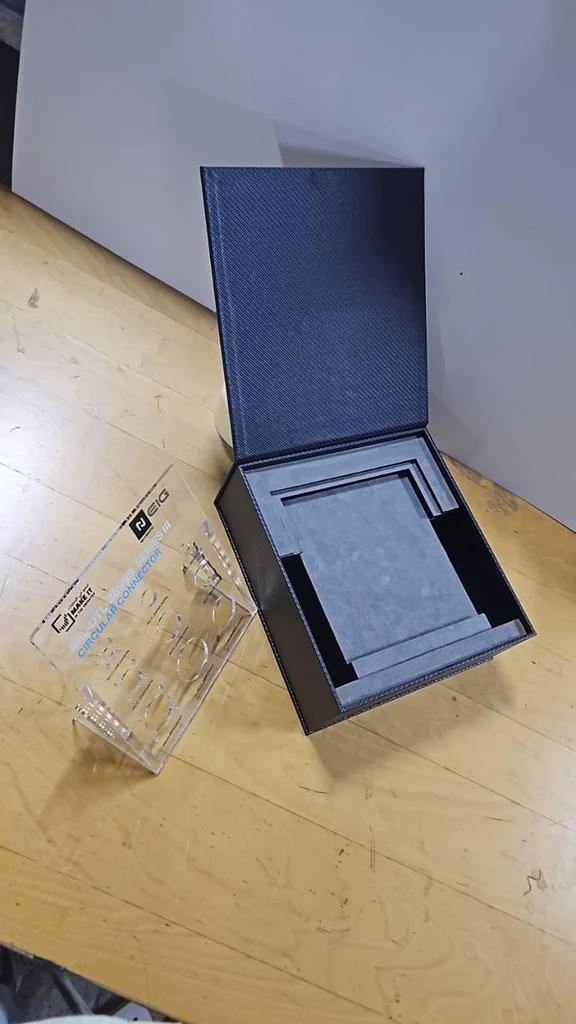
The finishing is what separates a box that looks considered from one that looks printed. These are the finishes we apply most often to presentation boxes.
Pricing
A presentation box is priced by the four things that actually move the number. Nothing else on the quote changes it, so it is worth knowing which of the four you are paying for.
Caliper and the area of board consumed drive most of the material cost. A wide lid on a heavier board is the single biggest line on a presentation box quote.
A rigid two-piece build is assembled and ships as a finished object. A folding structure ships flat, which usually wins on landed cost for a large run and loses on how it feels in the hand.
A flat board tray is inexpensive. A foam or moulded pulp cradle cut to a profile, or a tiered riser, is a separate tool and a separate operation.
Foil stamping, embossing and spot UV are priced per setup plus per piece. Putting the finish on the inside lid only, rather than both sides, is a legitimate way to hold the number down.
We quote the structure, the insert and the finishing you actually asked for, so the number you approve is the number you pay. Send your brief for a per-structure comparison.
Process
Five steps, and the sample is the one that matters. Nothing goes to a bulk run until the opening sequence has been approved in the hand.
Tell us what is going in the box, its dimensions, how it should sit, and the date it needs to be finished.
We propose how the box opens, where the product sits and where the branding lands, then send a drawing and a section for approval.
A physical sample in your chosen board, wrap and finish, so the reveal can be judged in the hand rather than on a screen.
You approve the sample and we produce the run, with colour confirmed on a printed sheet before the bulk starts.
Packed to your shipping format and delivered across all seven emirates, with the window agreed against your date.
Sampling
A presentation box cannot be judged on a screen or a swatch, so the sample we build is the same board, the same wrap and the same insert as the run.
We build a real box in your chosen caliper and finish, with the insert fitted, so the opening sequence is exactly what production will produce.
The sample is meant to be opened one-handed by an edge and looked at, which is how you find a lid that drags or an insert that hides the product.
Brand colour is matched to your file or a physical reference and confirmed on a printed sheet, so the shade is not a surprise on the finished box.
If the box is for a launch or an event, the production plan works back from that date, including the delivery window to each emirate.
Local
Presentation boxes manufactured in Dubai, UAE for brands that sell into this market. We build, sample and finish on our own floor, and deliver across all seven emirates.
A presentation box is the one pack where the customer is holding the brand rather than the product. That is why we would rather build it next to the board cutting and the insert fabrication than ship a specification between suppliers and hope the seams line up.
Before You Order
Four questions decide most of a presentation box. Answer them in the brief and the first reply you get back will be close to final rather than a list of questions.
Lift-off, hinged, sliding or a windowed front. This decides the board, the corner construction and the insert, so it is worth deciding before anything else.
How far above the tray the item should stand, and how much of it should be visible once the lid is off. This is the number that makes or breaks the reveal.
The inside lid is usually the highest-value surface on the whole pack, because it is the one thing photographed at the moment of opening.
The date the finished boxes need to be in hand, not the date you place the order. We plan backwards from it, including delivery to each emirate.
Why Us
A presentation box has more parts that have to agree with each other than almost any other pack we make. Keeping those parts on one floor is the whole argument.
A presentation box is drawn as one assembly rather than a set of parts, so the lid clearance, the product position and the branding surface are agreed in the same drawing. It also means a change to the insert does not restart the job with a different supplier.
Related
Ideas
Short reads on how a presentation box is specified, what the reveal depends on, and where the money actually goes.
How each rigid structure opens, what it costs and where it works best.
Read BlogFoam, velvet, suede and flock — matching the insert to the product it protects.
Read BlogHow a misaligned wrap is the most visible flaw on an otherwise good box.
Read BlogFAQ
A presentation box is judged on the moment it opens. The product is normally visible the moment the lid lifts, sometimes through a window or an open front, and the structure is proportioned so nothing hides behind a deep wall. A gift box is designed around the giving rather than the showing, so it is often deeper, more closed and heavier than the product strictly needs.
Both are possible and the choice is a cost decision as much as a design one. A rigid two-piece build gives a square, unhumped lid and a reliable reveal, which is what most product launches and award boxes use. A folding structure printed to look rigid costs less to ship because it collapses flat, and suits a product that is not going to be displayed open.
A rigid presentation box is usually built on 2.0mm to 3.0mm greyboard, chosen so the lid does not bow when it is lifted by one edge. Below 2.0mm a wide lid will flex visibly during the reveal, which is exactly the moment you cannot afford it. The caliper is set by the largest span of lid and by how the box will be held, not by the weight of the product.
The insert decides how the product sits when the lid comes off. A foam cradle cut to the exact profile grips the item and stops it moving. A folded paperboard tray or a tiered riser presents it higher and costs less. A die-cut cardboard bed suits lighter items. The insert height also controls how much of the product the customer actually sees.
Yes, and for a presentation box the inside lid is usually the best surface on the whole pack. A foil-stamped logo, a printed message or a debossed pattern lands at the exact moment attention is highest, and it is the one area a customer photographs. We can also add a foam or board plaque carrying a name or an award title.
Minimums depend on the structure and the finish rather than on the box itself, and we confirm the figure in your quote. A plain rigid two-piece box with a printed wrap can often start lower than a fully bespoke shape. Foil stamping, spot UV, a window and a custom insert all add setup, so the honest number is the one that includes the finishing you actually asked for.
Yes. Finished presentation boxes are delivered across Dubai, Abu Dhabi, Sharjah, Ajman, Umm Al-Quwain, Ras Al Khaimah and Fujairah, with the window agreed against your production and event dates rather than quoted as a generic lead time. If the box is for an event, tell us the date in the brief and we will work back from it.
Yes. We colour-match to your artwork or to a physical reference, then confirm with a printed sheet before the bulk run so you are not discovering the shade on the finished box. Foil, spot UV, embossing and soft-touch lamination are all available and can be combined on the same lid without one finish fighting another.
Rigid boxes arrive assembled, ready to pack, because the corners are what make a reveal look right. Folding structures arrive flat with a fold instruction, which is usually better for volume shipping and for assembling on site. Either way you approve a real assembled sample first, so nothing about the opening sequence is a surprise.
That is often the reason to spend on a rigid build. A rigid presentation box with a fitted insert is usually strong enough to be kept, filled again and reused, which changes the cost per impression considerably for launches and corporate gifting. We can spec the board and the insert for repeat use rather than for a single opening.
Quote
Six lines is enough for a useful first reply. Anything you do not know yet, say so and we will propose it.
The item being presented, its measurements in millimetres, and whether it is fragile or has to stay upright in the box.
Lift-off, hinged, sliding or windowed front — and whether it is opened one-handed or set down first.
How far above the tray you want it to stand, and how much of it should be visible once the lid is off.
Your artwork or a reference, the colours involved, and whether branding goes outside, inside the lid, or both.
Include the quantity and the date you need the finished boxes. Both change the structure we would recommend, and both are easier to answer on the first reply than the fifth.Send your brief
Enquiries & Quotations
Tell us the product, how it should sit when the lid lifts, and the date it needs to be ready. You will get back a recommended structure, an insert option and a price for each.