
01
Retail Box Manufacturing
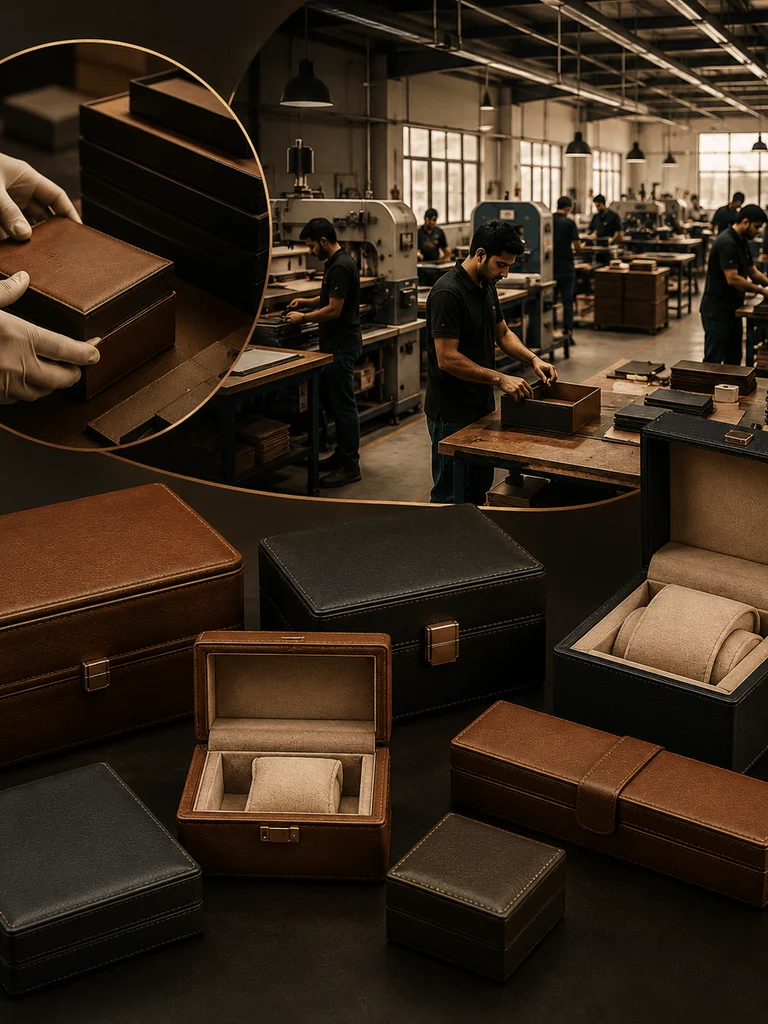
Cartons cut, creased and glued, rigid boxes wrapped and assembled, then packed to whatever case and pallet format your distribution centre actually receives.
Discuss This ServiceRetail Packaging Manufacturer in Dubai, UAE
Nivada Box is a retail packaging manufacturer in Dubai, UAE producing counter display units, shelf-ready cartons, windowed shelf boxes and e-commerce mailers specified around cost per unit, planogram fit and restock cycle.

Sell-Through, Not Shipping
Retail packaging is the only production cost in the store that the customer sees before they touch the product. It earns its budget by holding a shelf price, filling a planogram and surviving the trip from your warehouse to the shop floor.
Which means it is specified backwards from the margin. Take the retail price, subtract what you need to keep, and whatever is left is the packaging budget. That number decides board grade, structure and finishing before anyone talks about a dieline, and a structure that breaks it is not a premium look, it is a discount you have already taken.
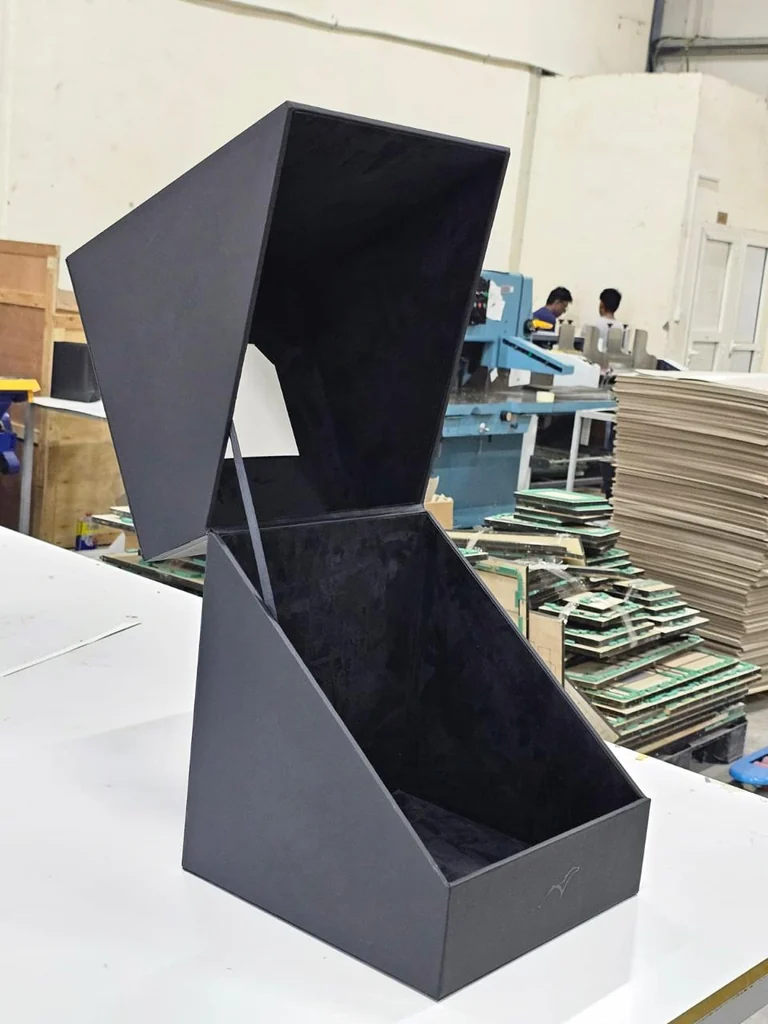
We build retail packaging in Dubai, UAE on our own floor, so the dieline, the shelf mock-up, the print and the finishing are one job. You approve a filled sample standing in a bay before a single case is printed.
Retail Formats
Twelve retail structures, each quoted on the format it is built for rather than the product inside it. Tell us the bay, the price position and the volume, and we will tell you which of these the money is really buying.
A folding carton that opens from a single tear strip into a display tray, so shelf-facing units stand up without a member of staff assembling them on the shop floor.
View Product
Small-footprint display blocks for the counter and the till, sized to sit beside a card terminal rather than on a shelf that does not exist.
View Product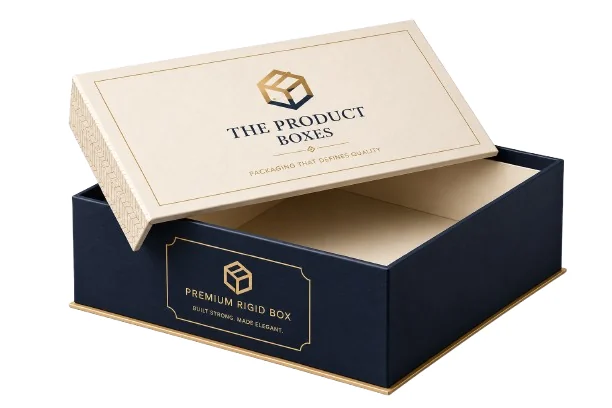
A die-cut window or an open front means a customer can see the product from the aisle, which is the difference between a browse and a walk-past.
View Product
Wrapped greyboard for lines where the pack has to carry a higher price than a printed carton can justify on its own.
View Product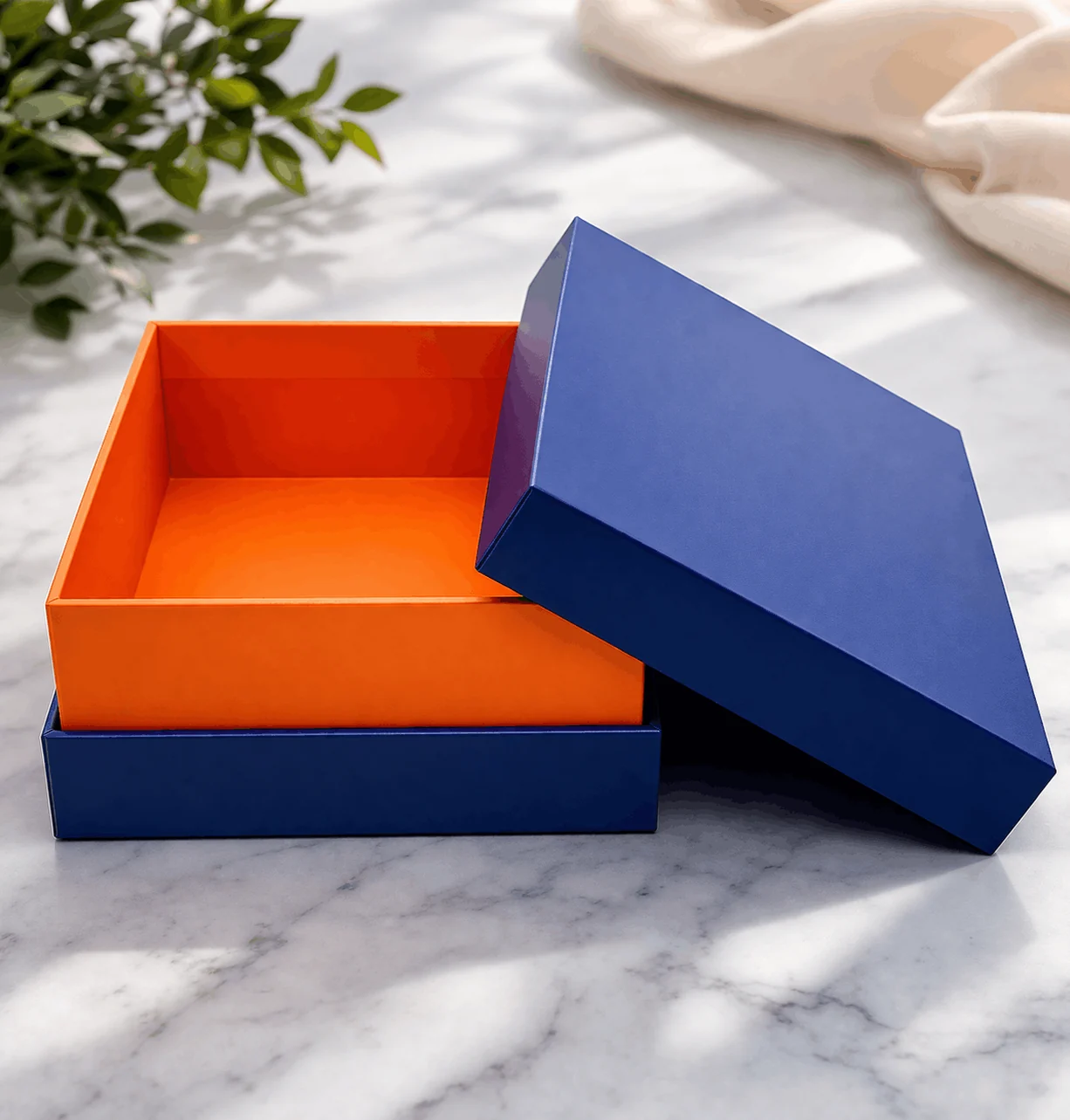
A drawer holds a heavier product and gives a longer opening, which is worth paying for on a price point where the customer needs convincing.
View Product
Corrugated in B and C flute and sized to your courier drop, so the parcel rate and the damage rate both come out of the same drawing.
View Product
Printed carry bags for collection counters, where the handover happens in front of the customer and the bag is the last thing they touch.
View Product
A divided tray for bundles and sets, where the pack has to justify a bundle price rather than a single-item price to the same shopper.
View Product
A clamshell or book-style fold that stands open on the shelf, so the product stays visible between shoppers instead of being closed again.
View Product
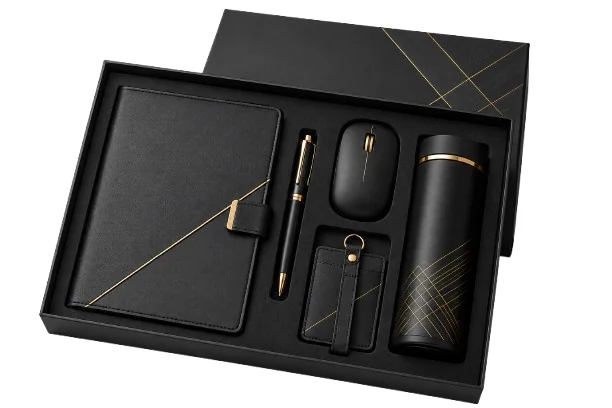
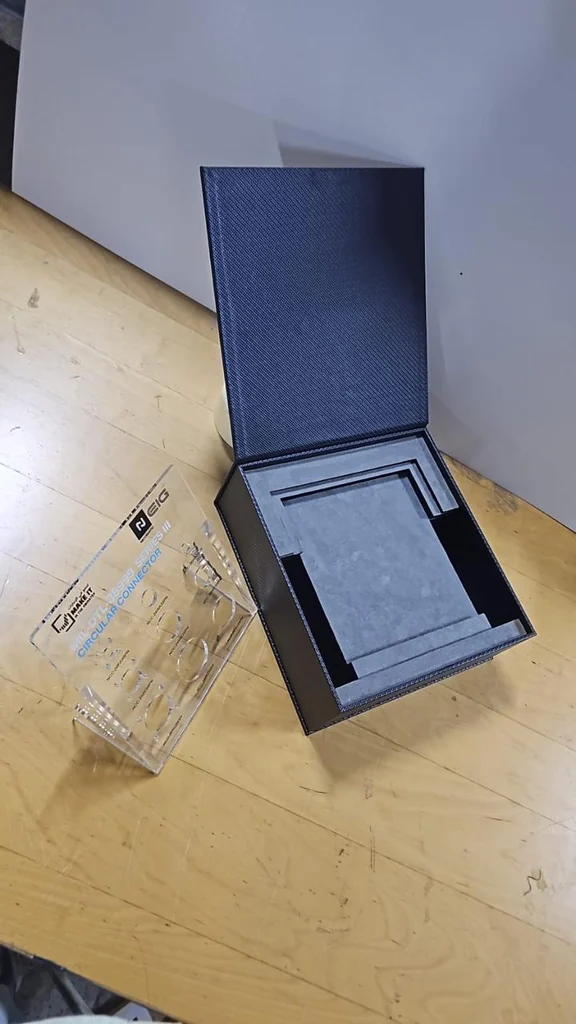
Textured wrap and leatherette for a counter tray, where handling is frequent and the surface has to survive being touched all day.
View Product
Seasonal and Ramadan runs built to land before a fixed selling window, with the reorder point agreed in advance rather than left to chance.
View Product
Flat-packed counter units and carry packs for a stall or a pop-up, where the display travels in a van and has to assemble in minutes.
View ProductStructure, Shelf and Price
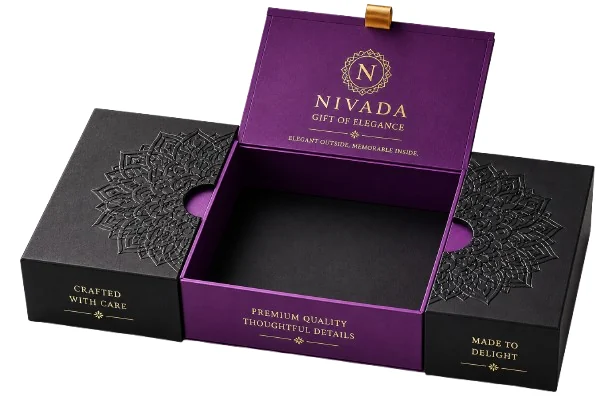
The trade is arithmetic, and it is worth doing out loud. A 350gsm printed carton is cheap per unit and reads cheap from four metres away. A wrapped 2.0mm greyboard box costs more per box and is frequently the reason the product beside it can sit at a higher price without a markdown conversation. Neither is right in the abstract; the answer depends entirely on what you are competing against on the same bay.
Capabilities
The same floor draws the dieline, cuts the board, applies the print and builds the filled sample, so a change to the footprint does not mean restarting the job somewhere else.
Retail Packaging DubaiCustom Retail BoxesShelf-Ready CartonsCounter Display UnitsWindowed Retail BoxesRetail Box ManufacturerE-Commerce MailersPlanogram-Fit Packaging
Cartons cut, creased and glued, rigid boxes wrapped and assembled, then packed to whatever case and pallet format your distribution centre actually receives.
Discuss This ServiceThe same product costed in two or three board grades and structures, so you can see what the shelf price has to be in order to carry the packaging.
Discuss This Service
Dielines drawn to your planogram dimensions, with the window and the creasing rules set so the box stands where it is meant to stand.
Discuss This ServiceA physical mock-up you can stand in the bay, which is how a footprint that is 6mm too deep gets found before a case is printed.
Discuss This Service
Trays, dividers and cut foam fitted so a bundle presents as a set and a fragile product does not move in transit.
Discuss This ServiceRuns planned around your reorder point and delivered to each emirate, so a store is not left waiting on a replenishment it has already sold against.
Discuss This ServiceThe Case
A pack that survives handling and reads as considered is the pack that lets a product hold its full retail price instead of being discounted to move.
A box that fits the bay earns facings, and facings per linear metre are what turn a customer walking past into a customer stopping.
A structure matched to how staff actually handle the product cuts crushed corners, re-packs and rejected deliveries, all of which land on margin.
Consistent external dimensions mean a shelf refits fast and a planogram audit passes, which is where most mid-size chains quietly lose selling space.
Sectors
The same carton behaves completely differently in a mall boutique and a supermarket aisle. Sector, bay dimensions and restock cycle decide which structure earns its cost, which is why we quote against the shelf rather than against the product alone.
Apparel
 Jewellery
Electronics
Jewellery
Electronics
 Beauty
Food
Paper
Home
Chains
Beauty
Food
Paper
Home
Chains
Use Cases
Garment and footwear lines compete on price against fast-fashion anchors, so the pack has to justify the price ticket rather than add cost to it. A printed carrier and a tightly sized 300gsm accessory box keep the unit cost low while the garment itself carries the premium.
Small electronics are compared on specification and price, and a plain white box quietly argues cheap. A printed inner tray with a fitted card slot inside a rigid outer sleeve lifts the shelf price by enough to carry the packaging.
A jewellery counter sells off the tray more than off the wall, so the unit has to sit flat, present each piece and survive being opened six times an hour. Low-profile divided trays do that job; tall presentation boxes do not.
Skincare is bought from testers and re-bought by people who already use the product. A die-cut window and a printed panel facing the aisle let a shopper read the benefit without breaking the seal, and let a tester be removed without destroying the pack.
Food packaging is judged on how long it still looks fresh on the shelf and whether it survives a hot delivery van. Food-contact-safe board, a grease-resistant liner and controlled ventilation are what stop a good product being marked down.
Books and stationery sell on thin, high-volume margins where packaging has to cost very little per unit and still survive being handled off the shelf. A snug 350gsm carton sized to the exact product usually beats a generic box on cost and damage together.
Homeware competes against marketplaces on price, and the pack is often the only thing a shopper sees before they order. A rigid box with a printed sleeve tells a buyer the item is coming from a shop rather than a warehouse.
A chain buying in volume is really buying consistency, because 4mm of difference in depth between two branches is a planogram failure. We hold the die, the board and the caliper against one specification, so a box that fits one bay fits every bay.
A stall has no stock room and no budget for a second delivery. Flat-packed counter units and carry packs that assemble without tools, and survive being rebuilt every weekend, are the entire requirement.
The same product leaves for two completely different places. A shipper built for a courier drop and a flat mailer built for a collection counter are cheaper to produce as two structures in one board grade than as two separate packs with two colour matches.
Packaging quoted per unit is only honest if the run length matches how fast you actually sell. We size the batch to your reorder point, so you are not paying for stock that ages on a pallet because a lower minimum looked attractive.
A return is a margin event, not an inconvenience. A box that reopens without a knife, without a replacement insert and without new board is the difference between a refund and a restock, and the second one costs almost nothing.
Finishing
Finishing is priced per setup plus per piece, so it is worth spending where a hand goes. Anything a customer touches all day, or a label that has to sit on top of, earns the money more reliably than a finish on a panel nobody handles.
Pricing
Retail packaging is quoted per box, so the only figure that matters is cost per unit at your real run length. Five variables move it, and board grade moves it furthest.
Board cost is driven by the area of sheet consumed and the grade itself. A larger footprint on a heavier grade is usually the single biggest line on a retail packaging quote.
A rigid box ships assembled and stacks cleanly; a folding carton ships flat and takes shelf space by the piece. Which is cheaper depends on your volume and how many stores have to be filled.
A die-cut window and a fitted tray are separate operations with their own tooling. On a long production run they are inexpensive, and on a short one they are the line that surprises people.
Foil, embossing and soft-touch are priced per setup plus per piece, and the same setup spreads a long way further across 20,000 boxes than across 2,000.
Send the product dimensions, the bay footprint and your annual volume, and we will come back with a cost per unit at two or three run lengths, so you can see exactly where the next order gets cheaper.
Process
Five steps, and the one that matters commercially is the shelf mock-up. Nothing goes into volume print until the box has stood in a real bay with the product inside it.
Tell us what the product is, the planogram footprint, the shelf depth and roughly how many units move per store per month.
We come back with a structure and a cost per unit at your run length, with a cheaper option beside it so the trade is visible.
A physical box in your run board grade and finish, and where the fit is tight, a bay mock-up you can stand on the shelf.
Colour matched to your artwork, finished, then packed to the case and pallet format your distribution centre receives.
Out to all seven emirates, timed against the stock-in dates your DC and stores work to, with a single collection point if you would rather receive centrally.
Sampling & Restock
A retail box is not approved until it has stood on a shelf with the product in it. We build that sample, and we schedule the repeat run around the week you will need it on the floor.
The sample is built at your run board grade and finish and packed with your actual product, because an empty box does not show what a bay will look like.
Where shelf fit is close, we produce a bay mock-up so depth, standing height and window height can be checked against a real planogram.
Once a footprint is approved the die, the caliper and the colour standard are held to it, so run three fits the same bay as run one.
Windows are agreed against your DC and store delivery calendar rather than a generic lead time quoted once and hoped for.
In Focus
Local
Retailers across the UAE bring packaging to us in Dubai because the number has to hold up twice: once against their own margin, and once against a shelf bay in a store we will never see. We draw, print, cut and assemble retail runs in our own Dubai facility, so the footprint that was approved in the sample is the footprint that arrives.
Chains and franchise groups care about one thing above all else, which is that a later run matches an earlier one. That means holding the die, the board grade, the colour standard and the external dimensions against a written specification rather than against whoever is on shift. It is also why our per-unit quotes hold: we know the board consumption, the setup and the run length before we price them.
Before You Order
Four numbers decide most of a retail packaging brief. Send them and the structure, the board grade and the cost per unit come back close to final rather than as a list of questions.
Your target gross margin per unit, and the ceiling you will accept for packaging. That single figure usually settles the board grade before anything else is discussed.
Bay width, shelf depth and the clearance between shelves, in millimetres. A footprint that does not fit the bay cannot be merchandised, whatever it costs.
Units per store per month, how many stores, and how often you reorder. This is what sets the batch size that keeps cost per unit honest.
What the product competes against on the same bay, and whether the pack has to justify a premium or hold a price-down. It decides how much board the money can carry.
Why Us
A retail packaging quote is only as good as the assumptions underneath it, and those assumptions live on the factory floor. Keeping cutting, printing, finishing and assembly under one roof is what makes the per-unit number defensible.
It is also what makes a second order predictable. The die, the board spec and the colour standard are held on our side, so when you reorder at four times the volume the box is the same box and only the setup spreads further. That is the difference between a supplier you reorder and one you re-brief.

Related
Ideas
Short reads on cost per unit, planogram fit and the returns arithmetic that decides whether a better box is actually the cheaper one.
Why premium presentation influences how customers value your brand.
Read BlogWhere to spend and where to save when a gift is judged by a client.
Read BlogHow to get a bag and a box that read as one brand on the same counter.
Read BlogFAQ
By the board area consumed, the structure, the finishing and the run length, quoted per unit rather than per project. The number that matters is cost per box at your actual volume, so we quote at two or three run lengths and let you see where the next order becomes cheaper. Setup, tooling and colour matching shrink as volume grows; the board itself does not, which is why footprint is worth arguing about.
It follows the price position and the handling, not only what is inside. A 300gsm to 350gsm folding carton is normal for high-volume consumable lines, 400gsm suits heavier or premium items, and wrapped greyboard from 1.5mm upward is what a rigid shelf box needs to hold a square edge through a delivery van. We quote the same product in two grades so the cost difference is visible rather than assumed.
Send the bay width, the shelf depth and the clearance between shelves, and we draw the footprint to those figures rather than to the product. We also check the standing height against the shelf above, because a box that stands too tall hides the shelf edge label and fails an audit. A physical bay mock-up is the reliable way to confirm the fit before anything is printed.
It depends on whether the structure uses a stock dieline or needs its own tooling. Stock structures and common footprints often start in the low hundreds, while a bespoke footprint or a custom window carries setup that pushes the minimum higher. We confirm the figure against your specific structure in the quote, and we will say so plainly if a stock footprint would do the same job for less.
Yes, and they are one of the structures we build most often. A counter unit is judged on its footprint beside the till, how quickly staff can refill it and whether it survives being wiped down all day, so the board grade, the print finish and the assembly method are specified for handling rather than for looks.
Often, yes, and it is a costing conversation rather than a design one. If your gross margin is fixed then the packaging budget is whatever is left, and we work backwards from that to a board grade and a finish. Sometimes the honest answer is a printed folding carton instead of a rigid box, and we would rather tell you that than quote a structure that quietly breaks your margin.
Yes. Everything leaves our own Dubai floor, and the window is planned against the delivery calendar your DC and stores actually work to rather than a generic lead time quoted once. Chains normally take a single consolidated drop at their distribution centre, and we schedule around that instead of your order date.
By holding one specification. Once a footprint, caliper and finish are approved we keep the die and the colour standard against them, so a later run fits the same bay and takes the same shelf label. That is the difference between reordering the same box and receiving something a few millimetres different, which is usually where planogram problems begin.
Yes, and we would normally specify the two as separate structures in the same board grade. A shipper is built around a courier drop and a flat mailer is built around a collection counter, so one product can leave the same store in two packs without bringing in a second supplier or a second colour match.
A physical sample built in your run board grade and finish and packed with your actual product so the shelf presence is judgeable, plus a bay mock-up where the planogram fit is tight. Colour is matched to your artwork or a physical reference and confirmed on a printed sheet before the volume run starts.
Quote
Six lines is enough for a useful first reply, and three of them are numbers rather than adjectives.
What goes in the box, its measurements in millimetres and its weight, so the board grade can be set against something real.
Bay width, shelf depth and clearance between shelves, or a planogram extract if your merchandising team has one.
Units per store per month, how many stores you run, and how often you reorder. This sets the batch size.
What the product competes against on the same bay, and the finish you would like to see on a sample.
Include your target gross margin if you are able to share it. That one figure usually tells us the board grade before the first question has been answered.Send your brief
Enquiries & Quotations
Send the product, the bay dimensions and your volumes. You will get back a recommended structure, a cost per unit at your run length and a cheaper alternative to compare it against.