
01
Format Standards & Dieline Libraries
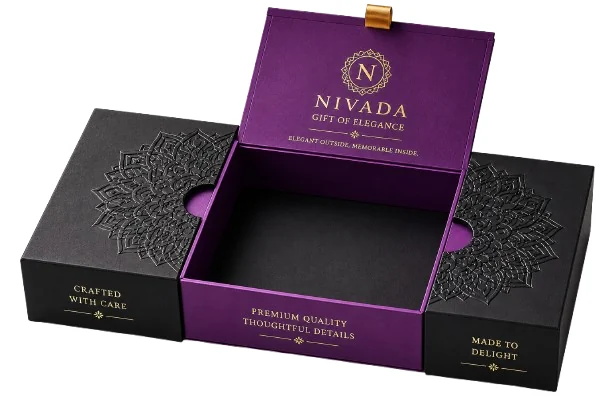
One dieline per format, held on file, so a new property takes the same box as the original instead of a redesigned one.
Discuss This ServiceHospitality Packaging Manufacturer in Dubai, UAE
Nivada Box manufactures hospitality packaging in Dubai, UAE for hotel groups, restaurant chains and event venues. Room amenity boxes, stationery packs, takeaway formats and VIP amenity boxes built to one approved specification and repeated on every reorder.
The Operations Brief
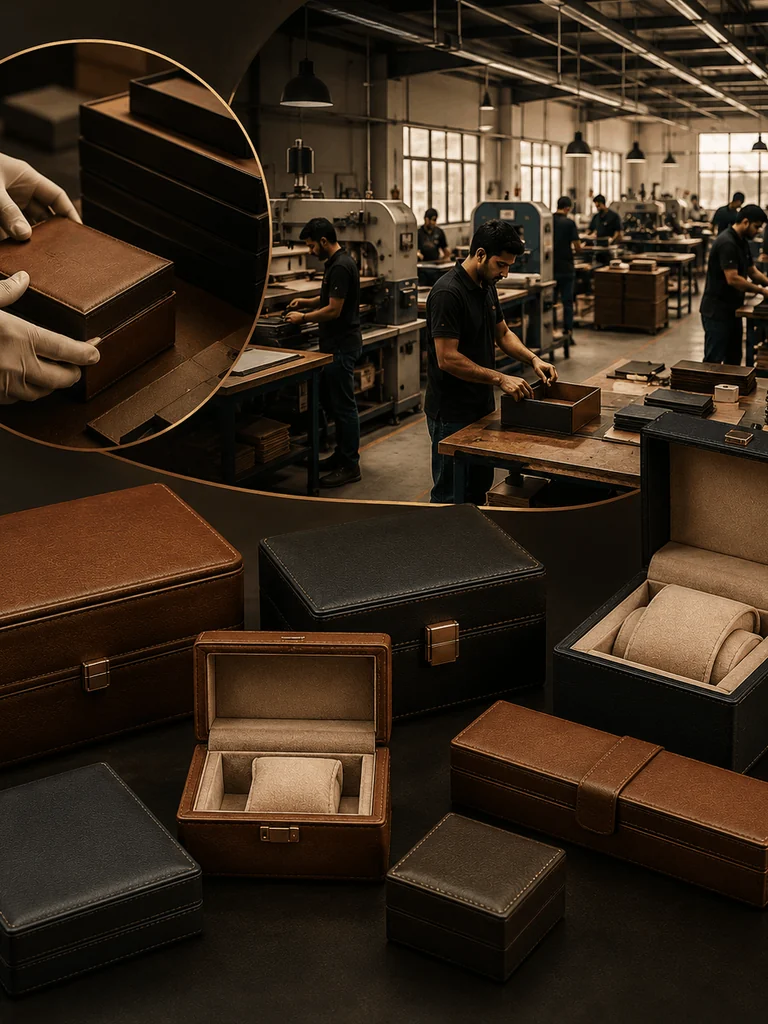
A hospitality box is not judged at a launch. It is judged by a housekeeper stacking two hundred, a courier lifting twenty at once, and a guest opening one with wet hands in a bathroom. That is why the specification starts with handling, not artwork.
Volume changes the question completely. A single gift box can be attractive and slightly fragile. The same box at five thousand units across nine properties has to ride a service lift, sit in a hot van, survive a wet room and still look identical in the lobby of the property you open next year. Caliper, closure, insert and coating are decided against that, and so is the unit cost.
As a hospitality packaging manufacturer in Dubai, UAE, Nivada Box draws each format once, samples it, then holds the dieline, board and print file against your account. A reorder becomes a re-run of an approved build rather than a negotiation from scratch, which makes a fixed four-week replenishment date realistic.

Formats
Twelve formats drawn for service rather than display. Each is quoted around board, structure, assembly method and the environment it must survive, then built to the same specification on every reorder.
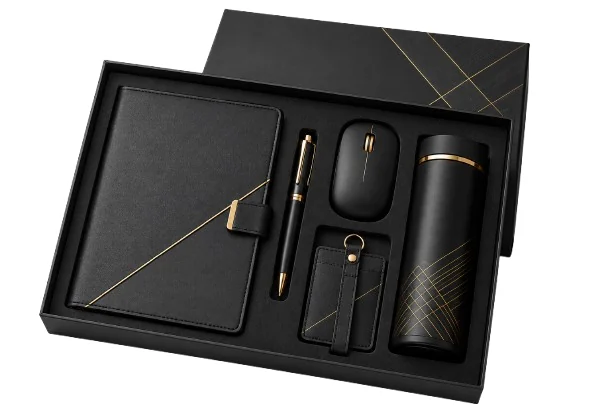
One rigid shell carrying soap, shampoo, coffee, a welcome card and a towel in a single trip, with a compartment per item so nothing migrates in transit.
View Product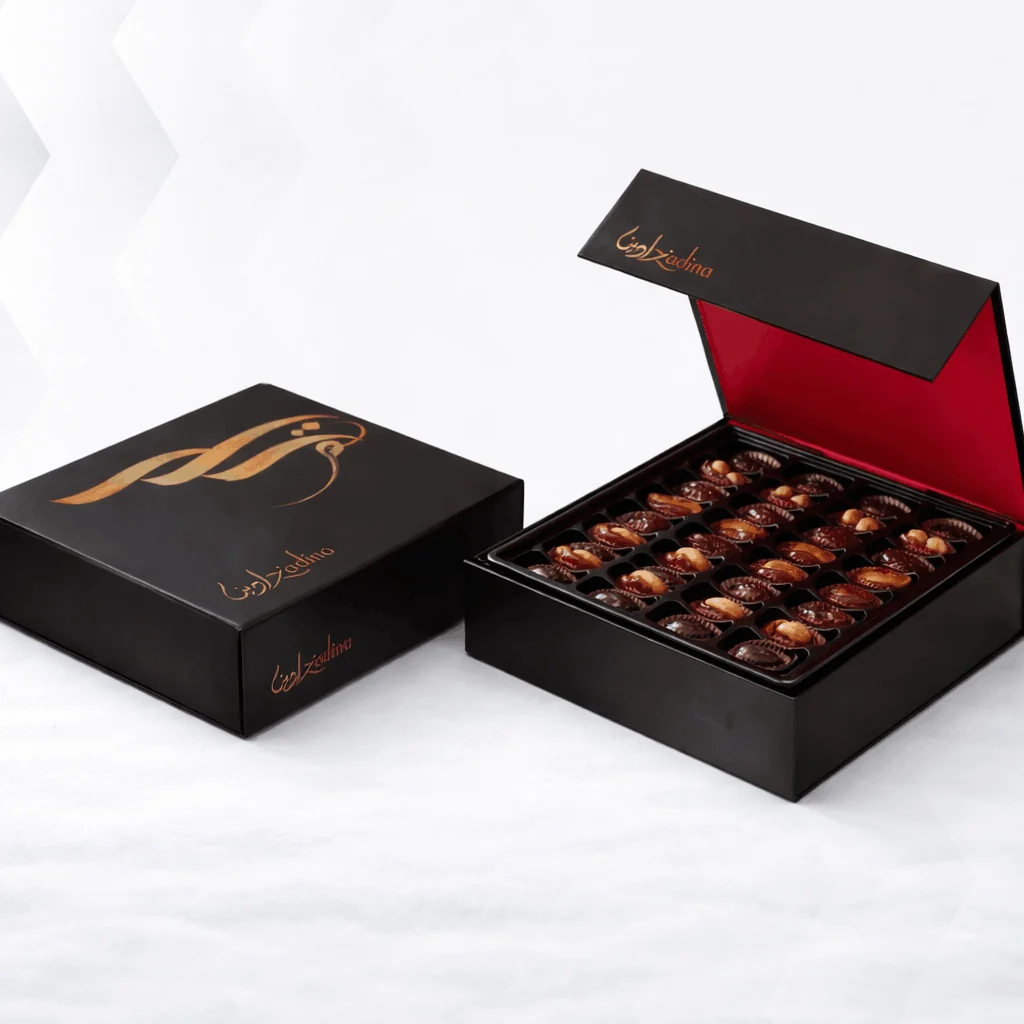
A single pack for notepads, key cards, restaurant guides and laundry cards, so housekeeping restocks one unit instead of assembling five loose pieces.
View Product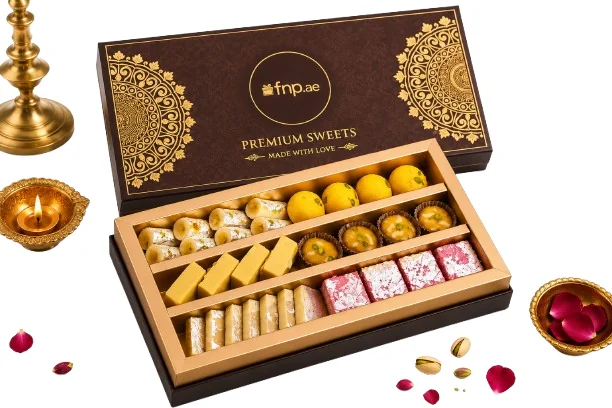
A grease-resistant liner and a board chosen for a wet, warm counter. This is usually the first format an operator standardises and reorders monthly for years.
View Product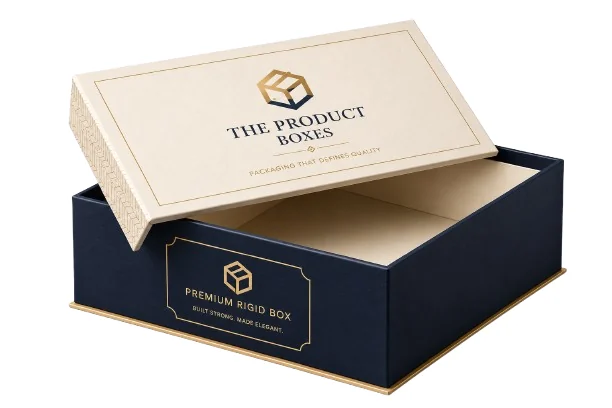
Strong enough to be carried on a tray without flexing, with a lid that vents steam rather than trapping it against the plate.
View Product
The upgrade path for suites, loyalty tiers and VIP arrival gifts, drawn on the same footprint as the standard box so one store room serves both.
View Product
Built to a floor plan rather than a product list, so five hundred covers are loaded, cleared and counted in a known number of trips.
View Product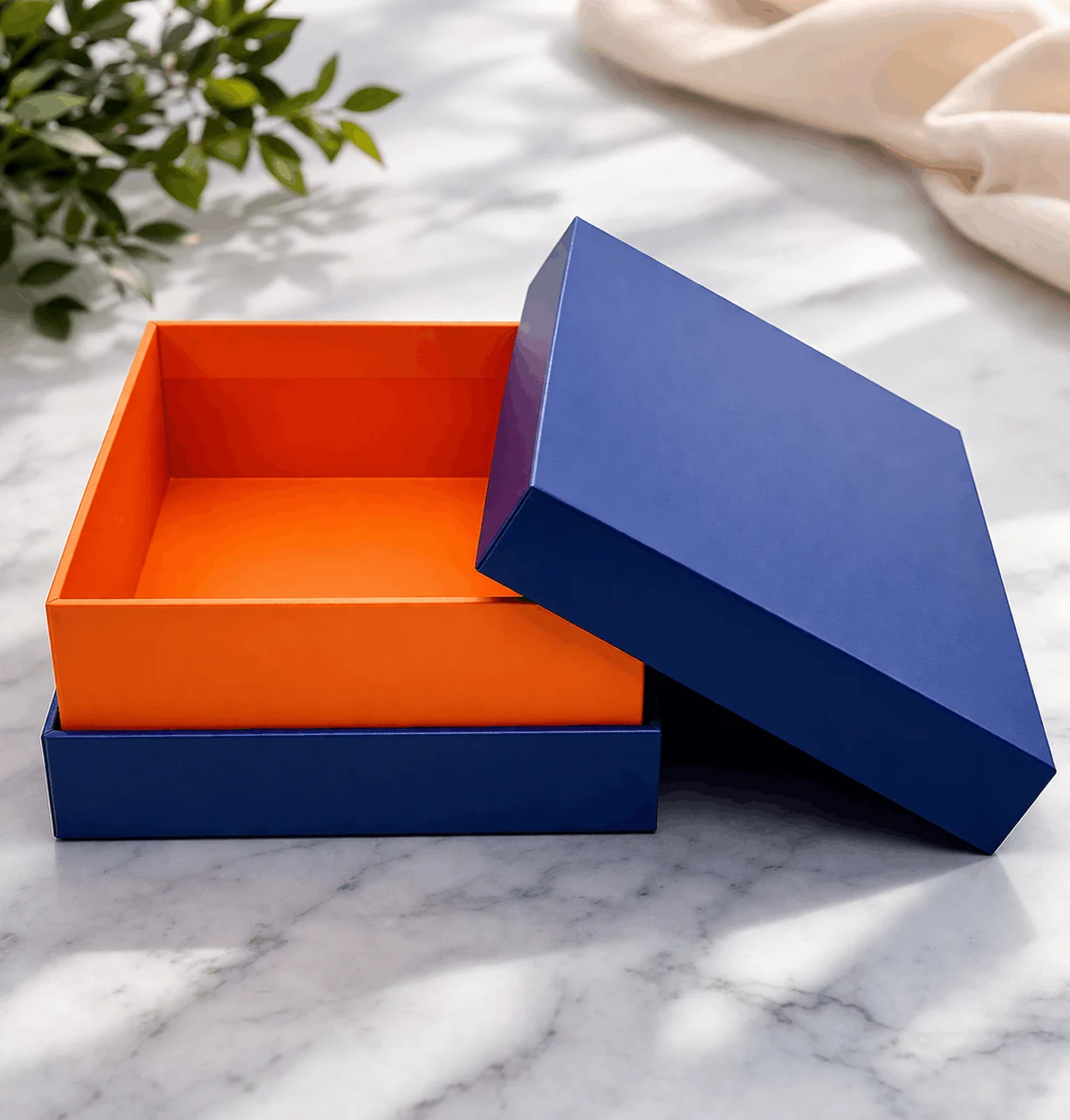
Sand, humidity and direct sun are hard on board. Coated stock and a wipe-clean tray liner are what let one format work a full season outdoors.
View Product
A lighter carton for a high-turnover lounge format, where the guest keeps nothing and the box is discarded within the hour.
View Product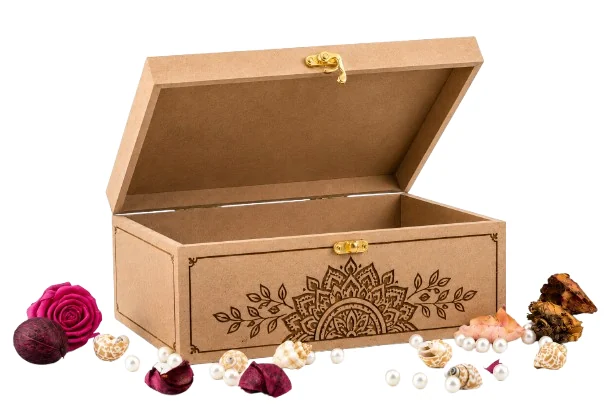
The evening turndown box and the resort arrival kit, where the money sits in the build rather than the volume and the box is expected to be kept.
View Product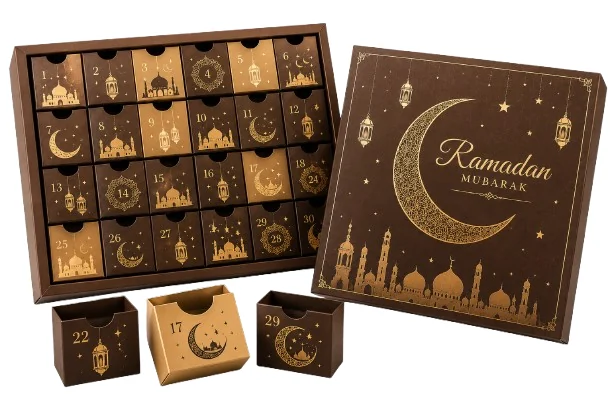
Peaks of two hundred thousand units against a fixed handover date. A specification locked well in advance is what holds the finish to the last carton.
View Product
Complimentary grooming and fragrance items in a compact rigid tray, sized to slot onto the same shelving and the same trolley as the standard box.
View Product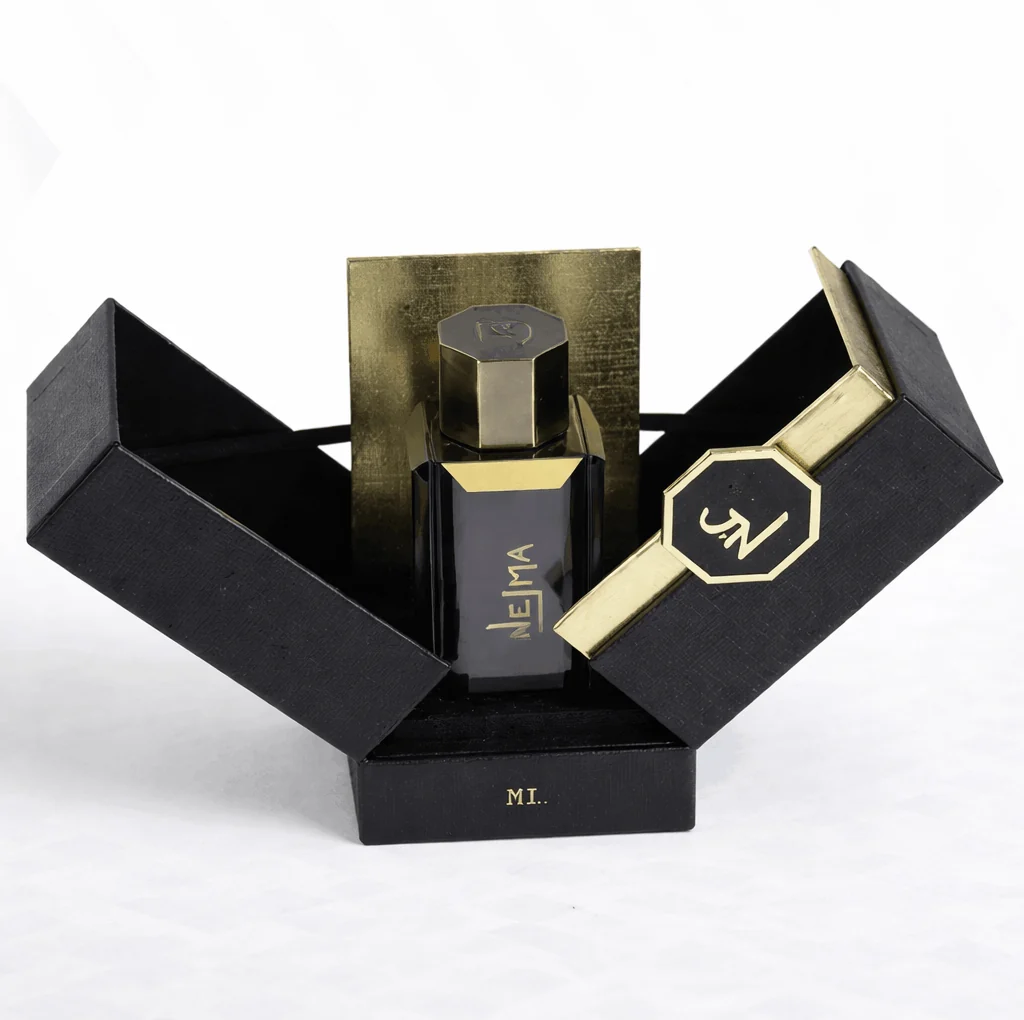
One box printed once and split into per-store packs for every outlet. This is the format where setup cost disappears into the run and unit price falls furthest.
View ProductStructural Specification
Hospitality boxes fail for predictable reasons, and almost none are aesthetic. A thin carton holding four glass bottles, carried one-handed up a service stair, fails at the third property rather than the first. A folding carton in a wet room delaminates at the corner. A hinged amenity box with a poor crease opens itself in a van. Each is a specification decision made long before artwork exists.

Production
Format standardisation, structural drawing, cutting, creasing, printing, finishing, kitting and multi-site despatch, all on one floor in Dubai, UAE, so a format change never moves the job to a second supplier.
Hospitality Packaging DubaiHotel Amenity BoxesTakeaway Boxes DubaiFolding CartonsVolume Box ProductionCustom Box ManufacturerMulti-Site DeliveryRepeat Order Supply
One dieline per format, held on file, so a new property takes the same box as the original instead of a redesigned one.
Discuss This ServiceCaliper, corner and crease set against the load, the grip and the trip count before a single sheet is cut.
Discuss This ServicePacked to a per-outlet count, labelled and palletised, so a housekeeper opens a carton that is already correct for one property.
Discuss This Service
Artwork and colour locked once and reprinted against the same file, so a Dubai box and a Sharjah box are the same shade.
Discuss This ServiceCodes, shipping labels and pallet counts verified before despatch, which is what keeps a multi-site distribution from going wrong in a loading bay.
Discuss This Service
Production planned backwards from your replenishment date, with despatch split by property and by emirate.
Discuss This ServiceThe Case
A group that standardises on a single format stops carrying four different amenity boxes across four properties, and stops reordering each one from a different supplier.
When a box is drawn for the person packing it, loading two hundred rooms becomes a repeatable task with a known time per unit instead of a daily argument.
A caliper chosen for the load rather than for the unit price is the difference between a service that runs smoothly and a complaint that reaches the buying office.
With the dieline, board and print file already approved, a repeat order is a re-run, which is what lets you promise a quarterly replenishment date to a general manager.
Sectors
A business hotel amenity box and a resort cabana hamper are built for different environments under the same discipline. What changes between sectors is board, coating, insert and assembly method, not the specification process.
Stay
Dine
Leisure
 Retail
Events
Retail
Events
 Travel
Groups
Marine
Travel
Groups
Marine
Use Cases
Everything a room needs on arrival in a single carry. A compartment per item means housekeeping loads one box in one pass instead of assembling four loose pieces.
Notepads, key cards, restaurant guides and laundry cards travel together in one refillable pack, so a room is restocked from a single unit rather than five.
The highest-frequency format most operators run. Grease resistance, a fast hand assembly and a stable unit price matter more here than any decorative finish.
A plated course is carried on a tray down a corridor, not set down in a box on a bench. A rigid shell with a venting lid holds the shape and releases steam.
Suite arrivals, loyalty upgrades and VIP gifts are few in number and closely scrutinised. Matching the standard footprint keeps one store room serving both tiers.
Outdoors, box failure is a material problem. Coated board, a wipe-clean liner and a non-slip base decide whether a format survives a season or warps inside a week.
Lounge and gate formats turn over in hours and are discarded almost immediately. The specification here optimises landed cost and packing speed rather than keepsake value.
A five-hundred-cover banquet is a logistics problem before it is a packaging problem. Packs loaded to a floor plan turn clearing and counting into a fixed number of trips.
Seasonal peaks of two hundred thousand units land against a fixed handover date. A specification locked well in advance protects the finish at the end of that run.
A chain needs the same box in every outlet, printed once and split into per-store packs. Setup cost spreads across the network, where unit price drops furthest.
Cabin service and ship-board retail work from limited storage behind a tight door. A stackable, nesting format reduces the volume a vessel must hold between turnarounds.
Serviced apartments blend housekeeping with hospitality, so the amenity pack has to survive being restocked by a different team in a different building on a different day.
Finishing
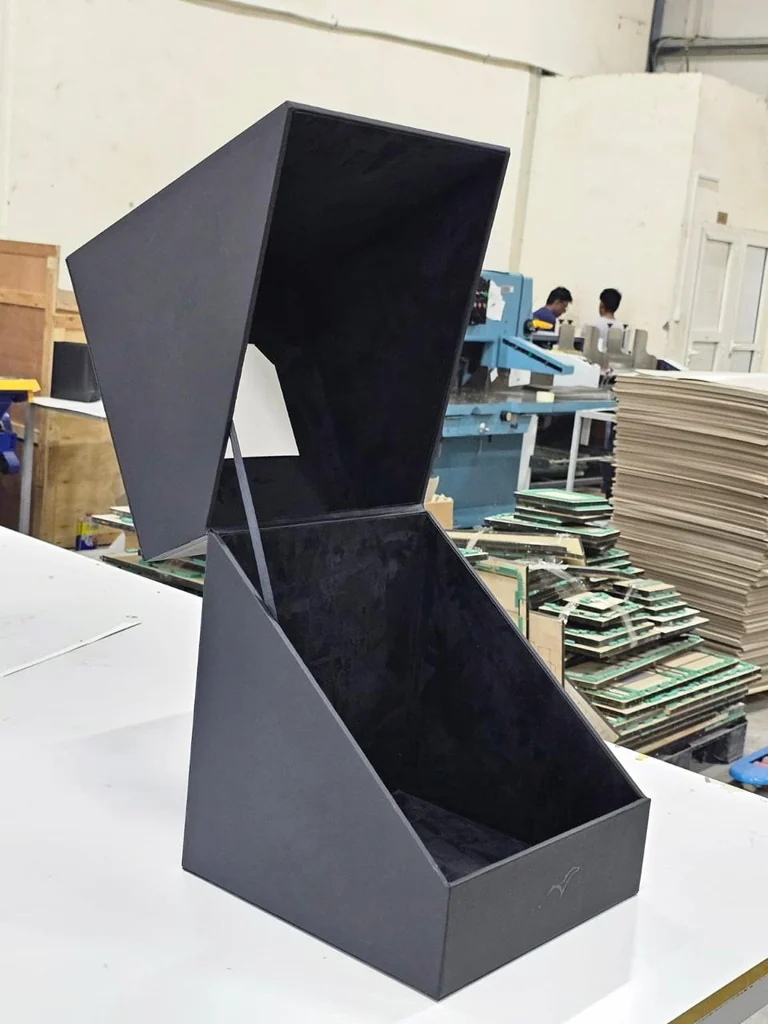
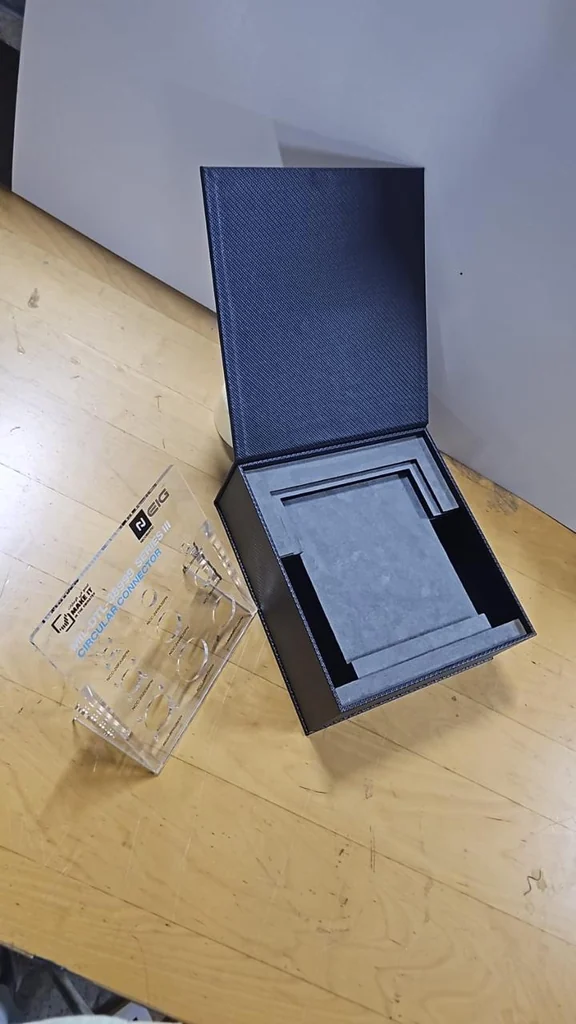
Finishing is usually picked for how the box photographs. In hospitality it also has to survive condensation, a wet hand, a cleaning cycle and sunlight, so substrate and coating are decided together.
Cost Control
At volume the number is decided by four things. Everything else on the quote is a consequence, which is why a cost review is worth having before the artwork is finalised rather than after.
Material cost is board area multiplied by caliper and by whatever the environment demands. Stepping a wet-room format from 400gsm to 350gsm coated is a genuine saving, as is one coating instead of a wrap plus a laminate.
A rigid box costs more to make and ship and saves assembly time at the property. A folding carton costs less per unit and hands labour to your team. At volume that trade is measurable in minutes, not opinion.
A flat die-cut tray is inexpensive. A fitted compartment per item, a liner or a multi-cell structure is a separate tool and operation, and is usually what makes a pack usable at all.
Plates, tools and colour approval are one-time costs. Across a group ordering the same box for twenty properties they are effectively free, which is the strongest argument for standardising.
Send the format, the load it carries, the environment it lives in and the annual volume. We come back with a board, structure and assembly method, and tell you plainly where the money goes.
Process
Hospitality programmes run on a cycle rather than a launch, so the process is built to end in a routine. The sample is not the milestone; the locked specification is.
What goes in the pack, who carries it, what environment it sits in, how many outlets and roughly how many units a year.
We settle board, caliper, coating, structure, insert, print and assembly method, then hold the dieline and the print file on file.
A sample is built and then put through the real route: carried up a stair, stacked in a van, wiped down and refilled a set number of times.
The run is printed, cut, finished, kitted to per-outlet counts, labelled and palletised against your replenishment date.
The next order re-runs an approved build with colour and caliper already verified, so volume can grow without the specification moving.
Sampling & Supply
One sample per format, not one per property. Once it survives the service test, the same build runs again, and the replenishment date stops being a conversation.
We build a real sample in the specified board and coating so it can be carried, stacked and wiped rather than only looked at on a desk.
Dieline, caliper, coating, print file and assembly instruction are documented, so a new property or a new buyer inherits the format instead of redesigning it.
A group order can be kitted into per-outlet packs and sent across Dubai, Abu Dhabi, Sharjah, Ajman, Umm Al-Quwain, Ras Al Khaimah and Fujairah on one production plan.
Print and finish are held against a locked file, so a reorder two quarters later is the same shade rather than a fresh match.
Local
Hospitality groups in the UAE run many properties, high staff turnover and a replenishment calendar that does not move. Nivada Box builds these formats in our own Dubai facility, so the dieline, board and print file stay under one roof between the first sample and the tenth reorder.
That continuity is the whole commercial argument. A group that standardises one amenity box across fifteen properties can plan labour, storage and delivery on a fixed cycle, because the box ordered in year two is the box tested in year one. We quote the structure, coating and assembly method that get you there, and will tell you when a heavier board is not what you need.
Before You Order
Four questions settle most of a hospitality pack before any drawing starts. Put them in the brief and the first reply comes back as a board, structure and assembly method rather than a list of questions.
The contents, their weight in kilograms and their dimensions. A pack carrying four glass bottles and a pack carrying three paper cards are different products with different prices.
A housekeeper, a chef, a courier and a guest are four different grips and four different drop risks. This is what sets caliper, corners and closure.
Bathroom condensation, an ice bucket, a sunlit cabana, a cold store or a loading bay. The environment decides the coating, the liner and the adhesive.
Units per outlet, number of properties and how often you reorder. Cadence tells us whether to optimise the unit cost or the assembly time.
Why Us
A hospitality programme is not a single job. It is the same format repeated for years, across properties that did not exist when the first sample was approved. That only works when one floor owns the build.
At Nivada Box the drawing, board cutting, creasing, printing, finishing, kitting and pallet checks all happen in our own Dubai facility. A reorder is therefore a re-run of a build we already hold, rather than a fresh quotation carrying a fresh risk of a different shade of grey. It is also why we can tell you honestly when a cheaper board would serve the same route.
Related
Insights
Written by the people running the cutters and the despatch bay: how a format gets standardised, what assembly really costs in minutes, and which boards survive a wet room.
Why compartments designed around actual contents outperform a big empty cavity.
Read BlogChoosing the right format for the volume and the budget per new joiner.
Read BlogHow rigid kits get opened, kept and remembered by new employees and clients.
Read BlogFAQ
Hospitality packaging is specified for repeated operational use rather than a single presentation. It is chosen for how a housekeeper, chef or courier carries it, how often it is opened, whether it meets moisture, and whether the same box can be produced again next quarter to the same standard. A gift box is judged once, usually by a recipient. A hospitality box is judged thousands of times, usually by staff, and when it fails the cost shows up as labour or a complaint, not feedback.
Start with a written format standard: the dieline, board caliper, coating, print file, assembly method and packing count per outlet. Approve one physical sample, test it on the real route, then hold that specification rather than re-drawing it per property. New properties and buyers inherit the format instead of redesigning it, and the one-time setup spreads across the network.
Any board in a wet room needs a coating or wrap, because uncoated fibre softens and loses edge strength quickly. Coated board around 300gsm to 400gsm is usually enough for a room amenity box, while poolside and cabana formats want a heavier grade with a water-resistant coating and wipe-clean liner. Adhesive and crease quality matter as much as weight, since a delaminated corner fails first.
A folding carton is cheaper to make and ship because it ships flat, and it costs more in labour at the property because somebody has to fold it. A rigid box costs more on the invoice and less on payroll. Across thousands of units that difference is measurable in seconds per unit, so the honest comparison includes assembly minutes, not unit price alone.
Minimums are driven by tooling rather than the box itself. A plain printed folding carton can often start in the low thousands, while a die-cut compartmented structure or rigid two-piece build carries a higher setup. We confirm against your format, annual volume and number of outlets, and will say plainly if a simpler structure would meet the same requirement for less.
Yes. We match to your artwork or a physical reference, confirm on a printed sheet, then hold that approved sheet against your account. That makes a reorder two quarters later the same shade rather than a fresh match, and it is the difference between a group that reads as one brand and one that reads as several suppliers.
The dieline, board caliper, coating, print file and colour approval are all held on file against your account. A repeat order is then a re-run of a build we have already produced, using the same tools and colour reference, so run twelve is checked against run one rather than a new standard.
Yes, and multi-site supply is the normal case. One production run can be kitted into per-outlet packs, labelled and palletised, then split by property and emirate across Dubai, Abu Dhabi, Sharjah, Ajman, Umm Al-Quwain, Ras Al Khaimah and Fujairah on a single despatch plan with one agreed window.
Takeaway formats are specified with a food-contact-safe liner and grease-resistant barrier between the product and the print. The board still carries full-colour branding outside while the inner surface stays cleanable and compliant. We will confirm which substrate and barrier suit the product, and whether a hot format needs venting so steam does not sit against the food.
Four things: what goes in the box and what it weighs, who carries it and how often it is opened, the environment it lives in, and your volume by outlet and cadence. Add the date you need the first delivery in hand and we come back with a board, structure, assembly method and a price, rather than a questionnaire.
Getting Started
A short brief earns a short quote. Tell us what you already know and we propose the rest, instead of sending a questionnaire back.
What goes in the pack, what it weighs in kilograms and the finished dimensions in millimetres.
Who carries it, how often it is reopened, and whether it lives in a bathroom, a cold store or a sunlit terrace.
Whether the box should arrive ready to fill or flat for your team to fold, and roughly what you can allow per unit.
How many properties, roughly how many units a year, and how often you want to reorder.
Include the date you need the first delivery in hand. It sets the sampling window, the production slot and the despatch plan across every emirate.Send your brief
Enquiries & Quotations
Tell us what goes in the box, who carries it, what environment it sits in and roughly how many you need a year. You get back a recommended board, structure, assembly method and a price for each.