
The lining is the first thing a hand touches when a box is opened. Four interiors do most of our work: velvet, suede, flock and microfibre. Each one changes the feel of the box, and each sits differently in the build. Here is how we choose a lining once we know the product and the quantity.

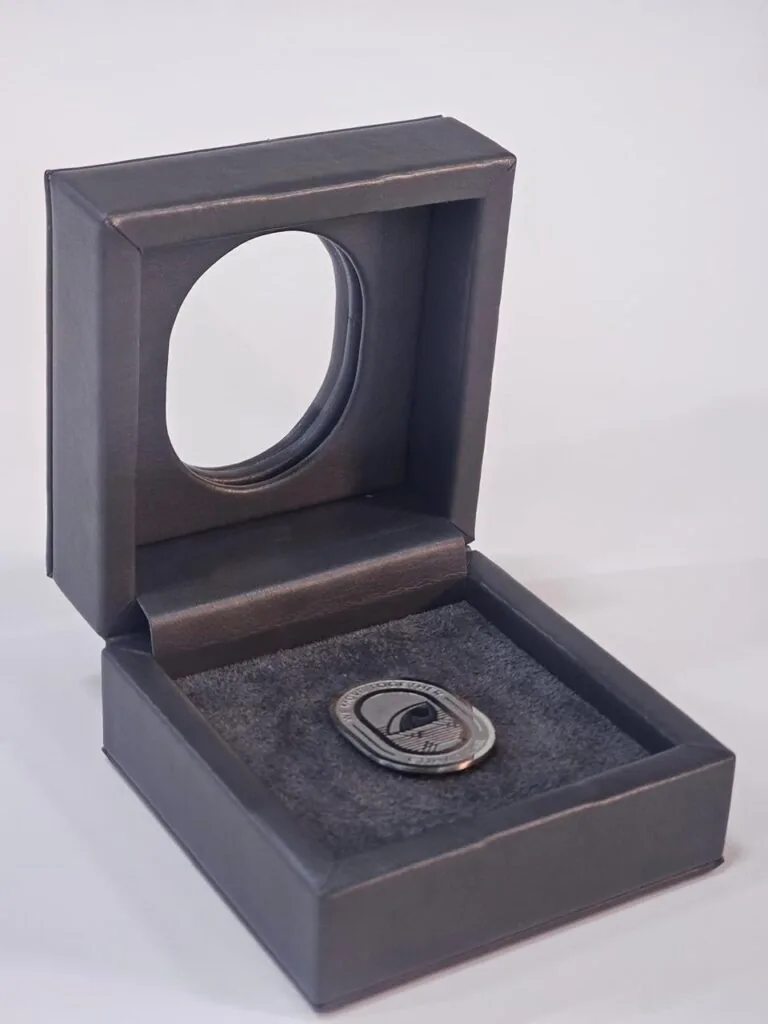
Close view of a rigid box lined in deep pile, showing how the interior changes the feel.
What each material actually is
The four differ in how they are made, and that difference drives everything that follows: feel, colour, cost and cleaning.
- Velvet. A woven pile with real depth that catches the light and reads as generous.
- Suede. A shorter, matte pile, natural or synthetic, that looks calmer and less formal.
- Flock. Fine fibres bonded straight onto the insert, so the surface stays perfectly even across a tray.
- Microfibre. A densely packed synthetic with very fine filaments that lifts dust instead of moving it around.
Hybrids exist too, such as a microfibre face over a foam base or velvet bonded to a card wrap. These pair a fine surface with firm support underneath.
How the choice changes the feel
Each interior sends a different signal. Velvet reads as occasion, suede as quiet restraint, flock as clean and practical, and microfibre as technical precision.
Colour behaves differently on each pile
A deep tone on velvet looks lighter where the pile catches the light, so we judge shades on a physical sample rather than on a screen. The same colourway can look composed on flock and more animated on velvet.
Practical differences on a production run
- Flock applies fastest across a large tray and keeps the interior tidy at a sensible cost.
- Velvet and suede are cut and fitted by hand, so they suit smaller quantities where detail is the point.
- Flock and microfibre wipe clean more readily than a deep velvet pile, which holds dust at the cell edges.
Durability follows use. A lining seen once at unboxing can favour appearance; a lining handled every week wants fibres that recover after being touched.
Deciding with a sample
We like to put all four in one tray with the product resting on each. That answers what a specification sheet cannot: how the tone shifts, how the pile marks, and how the interior sounds when the piece is lifted out of its cell.
Choosing a lining is a design decision and a practical one at once. Fix the feel you want, check it against the product and the quantity, then confirm the choice on a sample before the trays are cut for the run.
The Bottom Line
Confirm every choice on a physical sample before the run starts. Tell us what you are packing, how many you need and when you need it, and our team will come back with structure options, materials and pricing within a business day.