
Greyboard or MDF is a core decision, and it is made before any wrap, print or insert is discussed. The core sets how the box feels when it is lifted, the quality of the edge, how cleanly it cuts and what happens when the humidity changes. Everything the customer notices afterwards is built on that choice.

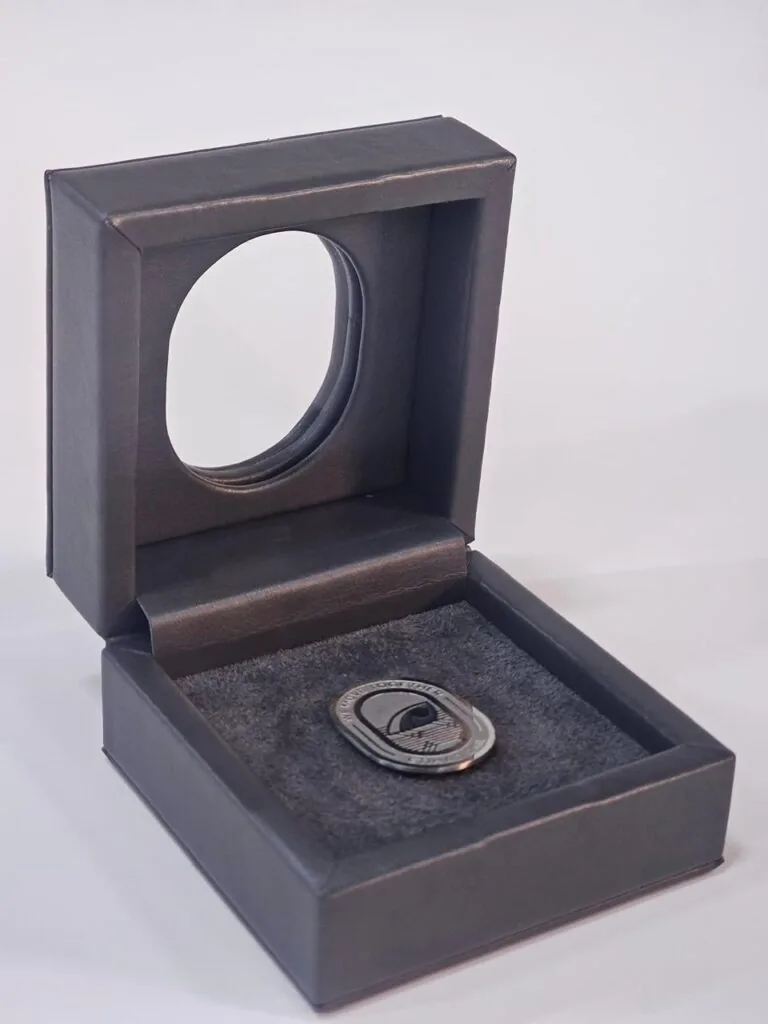
Greyboard and MDF cores side by side before wrapping: the edge and the weight are visible long before any paper is applied.
What each core actually is
Greyboard is laminated layers of recycled paper pressed into a dense sheet, sold by GSM and available across a wide range of calipers. It cuts cleanly, scores predictably and takes a wrap without argument. Because it is paper throughout, it behaves like paper: consistent, forgiving and easy to correct at the bench.
MDF is wood fibre bonded with resin under heat and pressure, which makes it smoother, denser and heavier by volume. It machines beautifully, holds a routed or shaped edge without fraying and gives a flat face that no paper core quite matches. The trade-off is that it does not bend, it moves with moisture, and it wants a different approach at the cutting stage.
How they differ in the hand
Weight is the first thing anyone notices. An MDF core of the same caliper sits noticeably heavier, which reads as substance on a jewellery or watch box and as an unwieldy load on a large gift box. Greyboard keeps a satisfying weight while leaving room for a heavier insert or a stack of printed cards inside.
- Weight: MDF is denser, so a large box in the same size gets heavy quickly.
- Edge finish: MDF gives a smooth machined edge, greyboard shows the laminated layers.
- Cutting: greyboard dies cleanly; MDF can be routed for shaped or rounded panels.
- Moisture: MDF swells if it takes on water, greyboard softens but dries back closer to shape.
- Wrapping: both wrap well, though a tight corner is easier to work in greyboard.
Where each core fits
Greyboard is the standard for rigid gift boxes, lid-and-base sets, drawer boxes and book-style hinge boxes. It folds at the corner, takes foil and emboss through the wrap without telegraphing, and keeps a run consistent from the first unit to the last. It is also the easier core to specify when a box has to match an existing one on a reorder.
MDF earns its place where the panel has to stay dead flat or hold a fixing: presentation plaques, display bases, boxes with a metal fitting, or a heavy lid that must not bow. It holds a screw or a pin, takes a routed edge and gives a premium thud when a lid closes. The moisture movement is the one caution, so it is stored flat and kept out of damp conditions.
Choosing with the product in mind
Start with what goes inside and how the box will travel. A heavy product already gives the package its weight, so greyboard usually wins and the saved weight goes into the insert. A shallow box that must present flat on a counter may suit MDF. The finish matters too: a textured wrap hides the greyboard layers at the corner, while a smooth wrap on MDF gives the cleanest face for print.
We confirm the core against the product, the insert and the finish before anything is quoted, and samples are approved before bulk production so you can feel the difference rather than read about it. Greyboard or MDF is not a preference; it is a decision the box is asking for, and the answer usually becomes obvious once the weight and the shape are known.
The Bottom Line
Confirm every choice on a physical sample before the run starts. Tell us what you are packing, how many you need and when you need it, and our team will come back with structure options, materials and pricing within a business day.