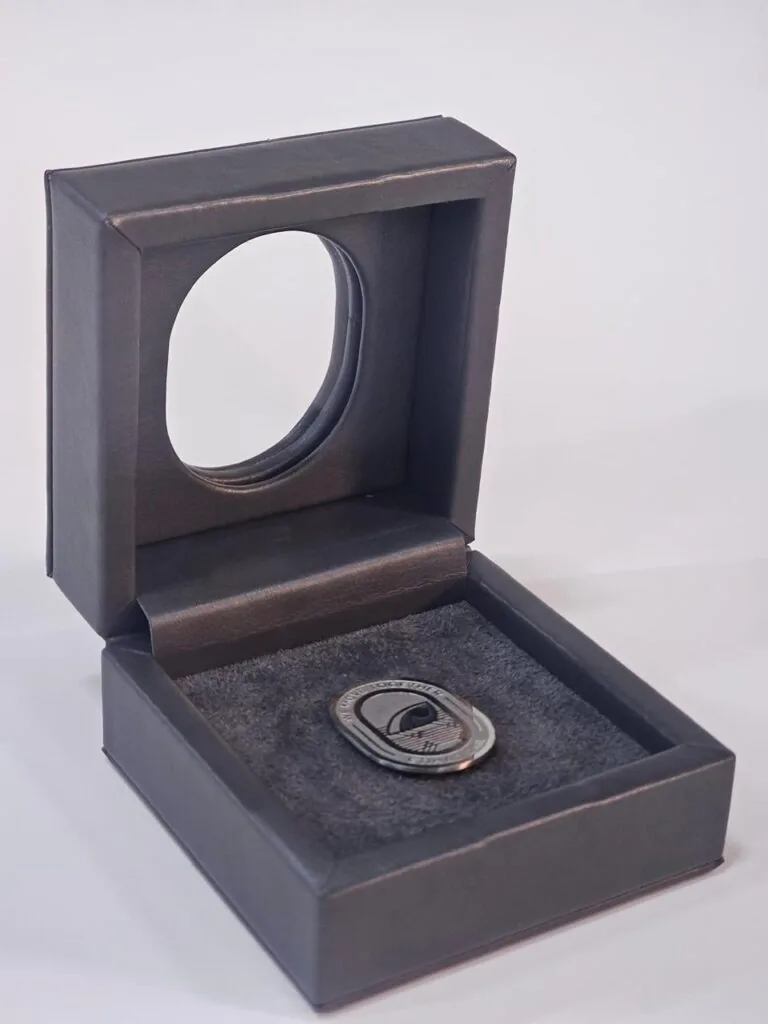

Retaining a specification between seasons is the cheapest quality control a gifting programme has. When the dieline, board, insert, finish and supplier notes are held properly, next year's reorder becomes a short production job instead of a fresh round of artwork, proofs and explanations.
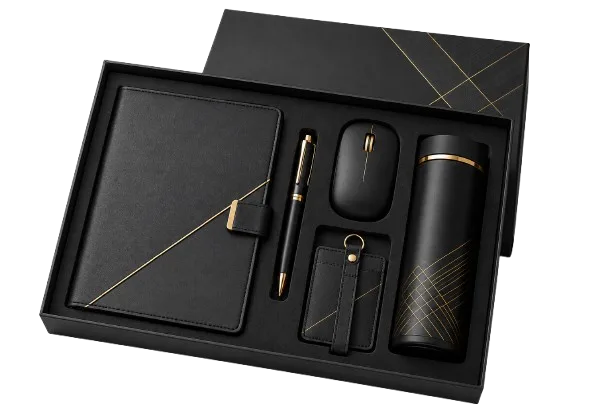
Rigid gift boxes with printed wraps and inserts, held ready for the next seasonal production run.
Why reorders drift
Reorders rarely fail because somebody chooses a different box. They drift because the original file has gone, the person who approved it has moved on, and the new team works from photographs. The run comes back a shade off, the insert sits a millimetre high, and nobody can say which decision changed or when it changed.
Print drifts quietly as well. A wrap that matched a Pantone chip two years ago can arrive looking different if the stock, the press or the lamination has changed, because the same ink sits differently on each of them. Without a retained reference there is nothing sensible to compare against, and the discussion goes in circles.
What a held specification contains
We keep the following for a held festive build, and we suggest buyers keep their own copy in one folder as well:
- The approved dieline with final dimensions, board grade and GSM marked on it.
- The print file, the ink references including any Pantone build, and the lamination or coating specified.
- Photographs of an approved sample, taken from the outside and again in the open position.
- The insert drawing, with cavity positions and any tolerance written on it rather than assumed.
- A short note on what was deliberately changed from the first concept, and why it was changed.
None of this is heavy paperwork. It is one folder with a date on it, and the point is that whoever picks the job up next season can read it without phoning three suppliers to reconstruct the history.
Holding the build between runs
Retaining a specification between seasons only works if the reference is still usable a year later. Physical samples should be stored flat and out of sunlight, because a box left near a window fades unevenly and a stored insert can take a set if something rests on it. We tag each held sample with the run date and the job reference.
Digital files sit beside them in a format the printer can open, not locked inside a program nobody keeps licensed. Fonts are outlined or packaged with the job, and the cutting form reference is noted wherever a die was made, so nobody redraws a dieline from a photograph of the old one.
Someone has to own it as well. We name one contact on each held build and write that name inside the folder, so when the order returns there is a person to ask rather than a shared inbox. It is the smallest item on the list and the one that saves the most time.
What may change, and what may not
Some drift is acceptable. A substitute lamination with the same finish, or a wrap sheet from a different mill of the same weight, will usually pass without comment from anyone. What must not move is the structure: interior dimensions, insert positions and closure fit are the things the gift list was built around.
If a change cannot be avoided, we re-run a sample, approve it before bulk production, and update the held folder so the next season starts from the new reference rather than the old one. Retaining a specification between seasons means the folder always describes what is actually being made.
The Bottom Line
Confirm every choice on a physical sample before the run starts. Tell us what you are packing, how many you need and when you need it, and our team will come back with structure options, materials and pricing within a business day.