
Warm sweets breathe. They leave the kitchen hot, they cool inside the box, and that cooling pulls moisture out of the air and onto the lid. Without ventilation, a confectionery gift box becomes a small humid chamber that damages the product and the print at the same time.

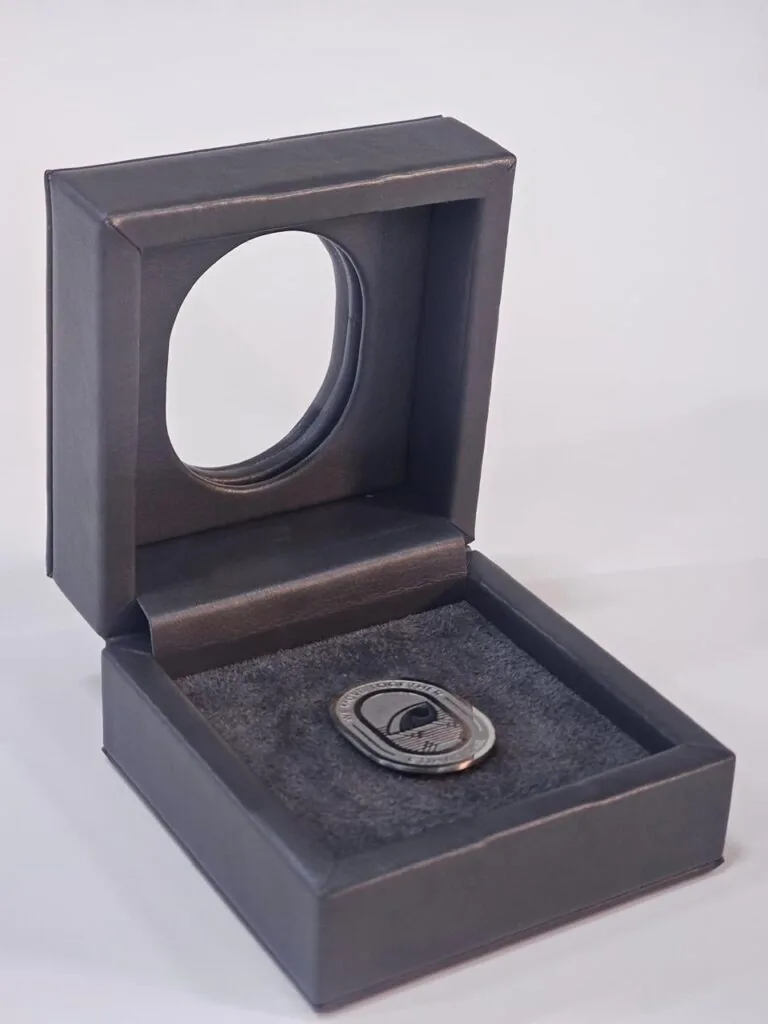
A confectionery gift box with discreet vents cut into the sides for airflow.
What happens inside a closed box
Condensation forms when warm, moist air meets a cooler surface. Seal that air inside a rigid box and the lid, the window and the insert all become places where water collects. Sugar work turns sticky, chocolate blooms, and a paper liner that looked crisp at packing starts to ripple by the time the box is opened.
There is a second effect that people notice later. Moisture softens the board itself, so a box that sat closed for a few hours loses some of its stiffness and the lid no longer sits quite square. Ventilation protects the structure as much as it protects what is inside it.
Heat also carries scent. A tightly closed box holds the smell of the product against the wrap and the print, and some inks and adhesives react badly to that. Ventilation lets the box equalise with the room, so nothing is trapped long enough to stain, soften or warp.
Where vents belong
Ventilation has to be designed rather than added at the end. A few small openings on opposing sides let air move through by convection, while keeping them low and away from the printed face preserves the look of the box. A die-cut pattern along the base edge is a common answer because it hides in the shadow line.
- Small die-cut slots on two opposite walls to encourage airflow.
- Openings placed below the artwork so the front panel stays clean.
- A vented lid or window where the product is meant to be seen.
- Spacing in the insert so air can reach every piece.
Placement matters as much as size. Vents sitting directly behind a logo destroy the design, and openings left on one side only move very little air. We map the pattern against the artwork and the insert before anything is cut.
Materials that help
Board choice matters as much as the vent pattern. A coated face that resists moisture, an insert that does not hold water and an adhesive that stays stable in a warm kitchen all contribute. Where the product is packed warm, we look at a liner chosen for the temperature swing rather than one chosen only for appearance.
We also think about the journey. Boxes travel in a vehicle, wait in a store room and then reach a table, and each step carries a different temperature and humidity. A design that vents well handles the whole trip instead of only the moment it was photographed.
What to ask before you order
Ask whether the sweets will be packed warm, how long they will travel, and whether the pieces are glazed or chocolate-coated. Those answers tell us what the ventilation has to do. From there we propose a vent pattern, build a prototype, and check the box with the real product inside before the run is released.
Good ventilation is invisible when it works. The box opens, the sweets are exactly as they should be, and nobody thinks about the air at all. That quiet result is the whole aim of the design.
The Bottom Line
Confirm every choice on a physical sample before the run starts. Tell us what you are packing, how many you need and when you need it, and our team will come back with structure options, materials and pricing within a business day.