A gift is opened twice: once by the person who receives it, and again in their memory. In the Emirates, where gifting moves between offices, families and retail floors every week of the year, the box carrying a product does visible work long before anyone wears, tastes or uses what is inside.
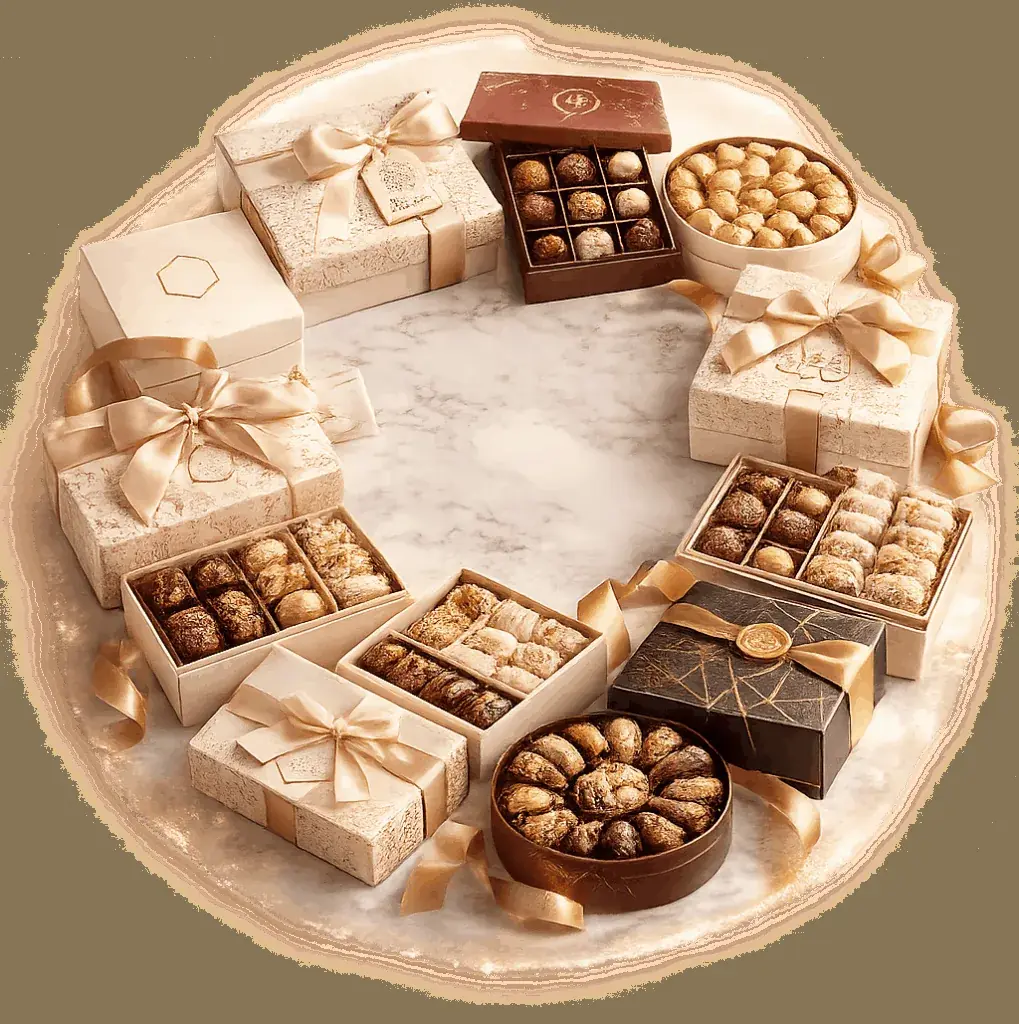
A wrapped rigid box, tight lid and one confident finish do most of the work premium presentation needs.
The box is the first thing anyone judges
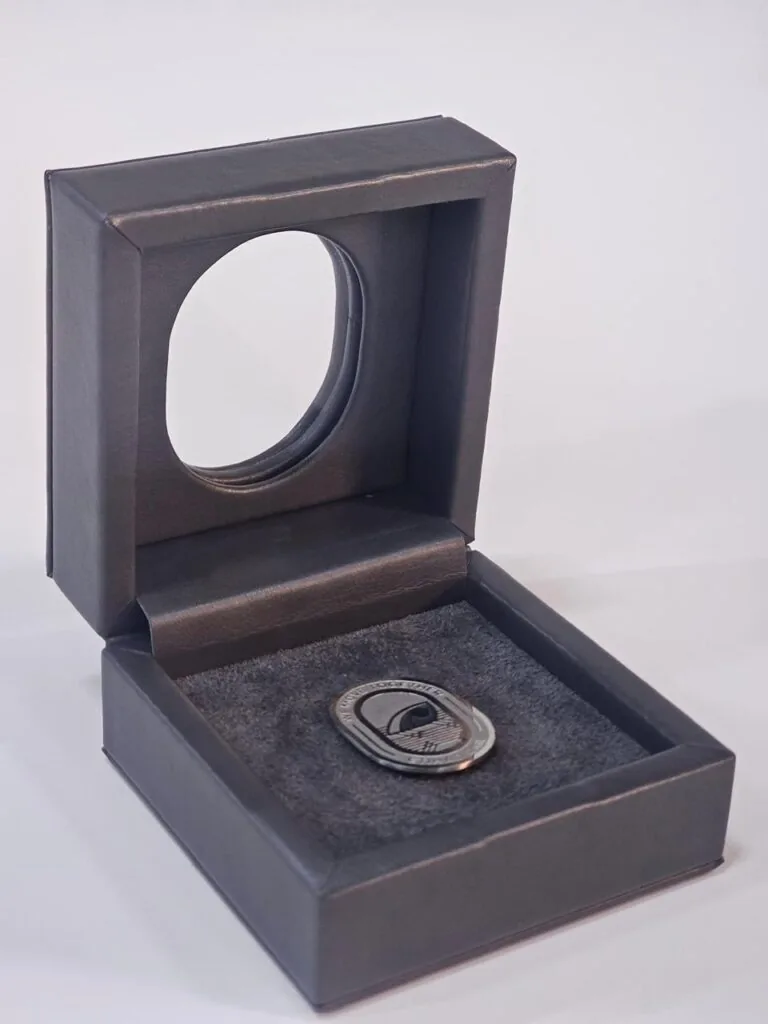
Pick up any luxury purchase in Dubai and the sequence is familiar: the weight of the lid, the resistance as it lifts, the way the tissue sits underneath. None of that is decoration. It is the first honest information a customer gets about what the brand thinks quality means. A loose lid on an expensive item contradicts the price tag; a tight, well-finished box makes even a modest product feel considered.
The effect is sharper here than in most markets because shopping and gifting overlap. A perfume bought in a mall is often headed straight to someone else's hands. Corporate gifts travel between companies through Ramadan and Eid. Hotel boutiques sell to visitors who will judge the whole city by the object on the counter. In each case the packaging travels with the product, and it keeps speaking after the sale is over.
What premium actually communicates
Premium is not one thing. Buyers respond to a short list of physical signals, and most of them are structural rather than graphic:
- Board weight and wall thickness — the box should feel solid before any print is seen.
- Fit and tolerance — lids that slide rather than drop, inserts that hold a product without rattling.
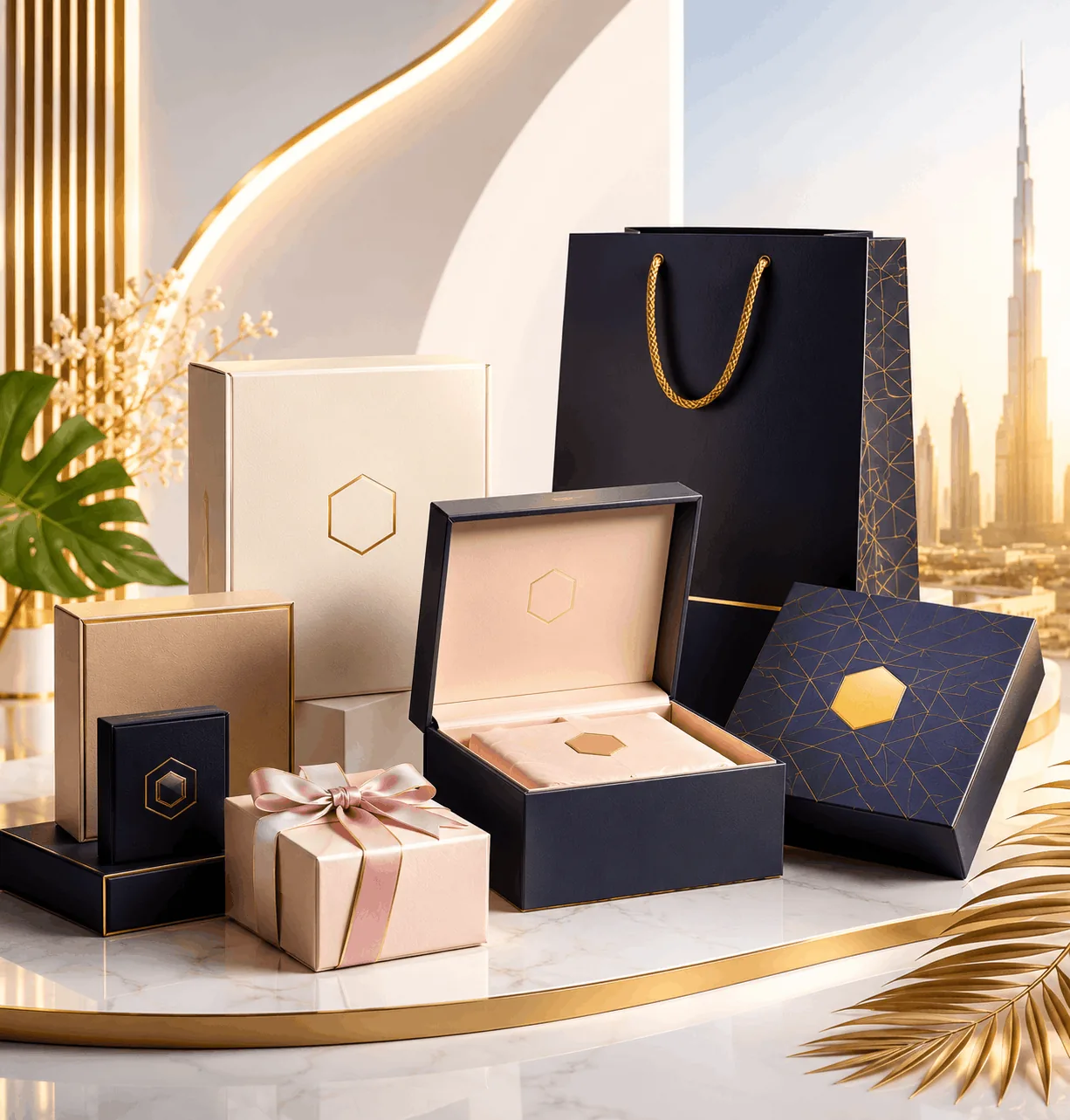
- Finish discipline — one foil, one emboss and one well-chosen paper read as deliberate; five competing finishes read as noise.
- Colour accuracy — gold that matches across a box, sleeve and card tells the customer the brand pays attention.
- The inside of the box — tissue, ribbon or a printed liner decides whether the opening feels finished.
Together these details communicate control. A brand that can hold a colour across a wrapped board and a printed sleeve is a brand that presumably holds a standard elsewhere too. That inference is the actual mechanism: customers are not admiring paper, they are reading evidence.
Where luxury packaging earns its cost
Gifting culture in the UAE gives a good box a longer life than in markets where it is torn open and discarded. Rigid boxes are kept for jewellery, watches and documents; perfume sets live on dressers; corporate kits are stored and refilled. While the box survives, the brand stays in the room — on a desk, in a drawer, in the background of a photograph.
This is also why presentation gets shared. A box that is built to be seen — clean edges, a legible foil, a lid that lifts slowly — travels between friends and appears online, which is reach a paid campaign cannot buy. Packaging is the cheapest recurring advertisement a product carries, provided it is worth looking at.
Specifying luxury without overspending
The cost of luxury packaging is decided mostly in the structure, not in the catalogue of finishes. Three habits keep budgets honest:
- Fix the board first. Thickness and construction set the impression, and a heavy wrapped greyboard with simple printing usually beats a lighter box carrying three effects.
- Choose one hero finish. Foil, emboss or soft-touch — pick the one that matches the brand and stop. Everything else can stay quiet.
- Approve a physical sample before bulk. Ink on screen and paper in hand are not the same object, and a sample costs far less than a reprint.
Every project here runs through the same sequence — structure proposal, material choice, printed sample, then bulk — so what was approved is what arrives. The luxury a customer feels is really a specification somebody refused to compromise on.
The Bottom Line
Confirm every choice on a physical sample before the run starts. Tell us what you are packing, how many you need and when you need it, and our team will come back with structure options, materials and pricing within a business day.