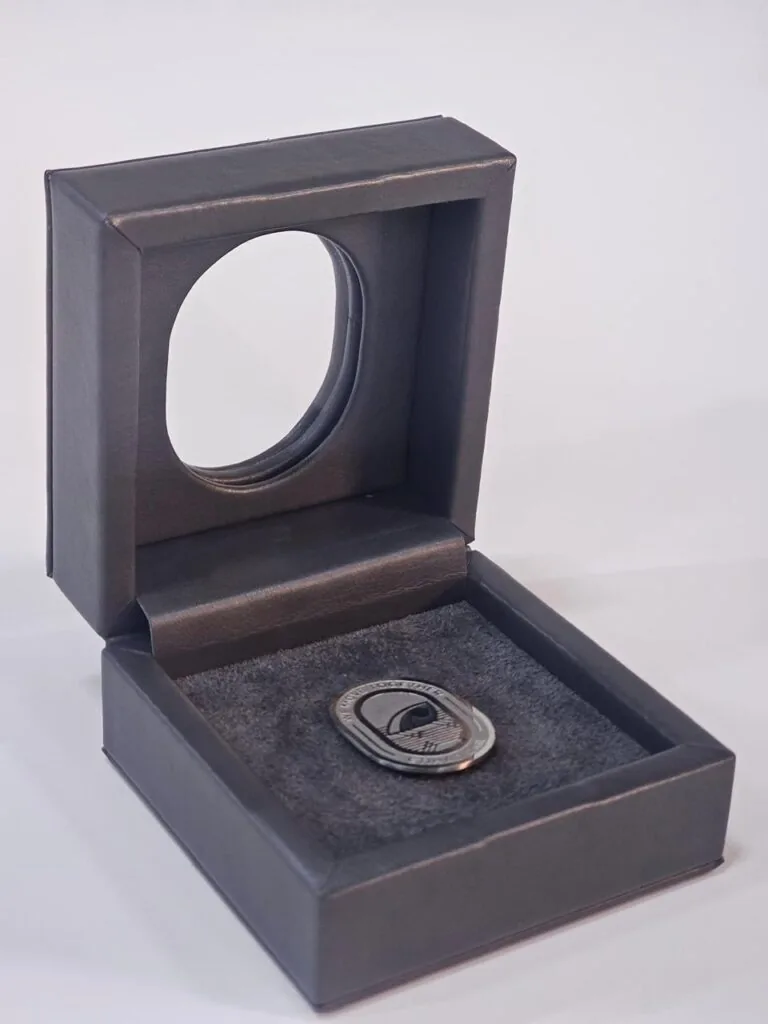
Genuine, bonded or PU covers get called leather in conversation and then specified as three completely different materials. Each has its own grain, thickness, backing and behaviour under a die, and each suits a different job. Choosing on the word alone is how a box starts peeling at the corner before its first year is out.
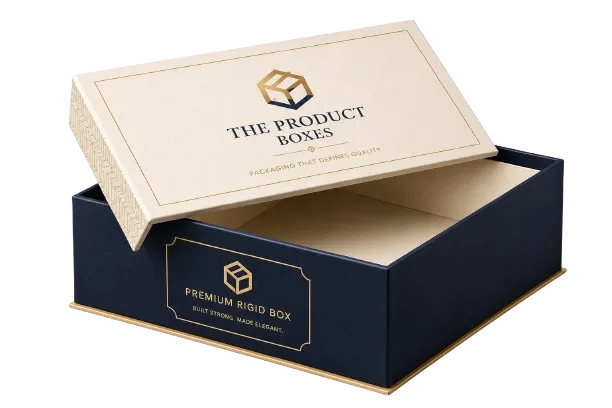
A leather-wrapped rigid box with a debossed logo: the cover material decides how the grain takes a stamp and how it ages.
What each material is
Genuine leather is a hide that has been tanned and finished, so the grain is natural and varies from panel to panel. It carries oils, softens with handling and takes an emboss the way it wants to rather than the way the drawing says, which is part of its character and part of the reason panels are cut with care around the corners.
Bonded leather is built from leather fibres and particles pressed together with a binder, then finished with a repeated grain pattern. It gives a more consistent sheet at a lower cost, but it has no continuous fibre structure, so it flexes differently and can dry out where it wraps tightly around an edge. PU is a synthetic film over a fabric or paper backing: consistent, available in any colour and stable in storage.
How each behaves in use
The differences show up in handling rather than on day one. A cover that looks identical in a photograph can feel cold and plasticky or warm and supple within a second of being touched, and that judgement is made before anyone notices the logo. Repeat opening is the second test, especially on a fold or a magnetic lid that flexes every time the box is used.
- Grain: genuine varies panel to panel, bonded and PU repeat predictably across the run.
- Emboss response: genuine holds a soft, deep relief while PU takes a sharper, cleaner edge.
- Corners and folds: genuine stretches and recovers, PU keeps its memory, bonded is least forgiving.
- Cleaning: PU wipes clean, genuine darkens slowly with oils, bonded can mark permanently.
- Ageing: genuine develops a patina, PU stays unchanged, bonded is prone to surface wear.
Where each one makes sense
Genuine leather suits a box that will be handled for years: a watch presentation, a jewellery case, a desk organiser or a gift meant to stay in use. The cost sits in the material and the cutting, and the payoff is that the piece improves rather than deteriorates with handling. It is also the easiest cover to emboss deeply, because the surface works with the die instead of resisting it.
Bonded leather earns its place on larger panels and inner linings where flex is limited and consistency matters more than ageing. PU is the sensible choice for retail counters, promotional runs and programmes where colour has to match exactly across a batch, or where the box will sit in storage rather than in a hand. Genuine, bonded or PU is not a ranking, and none of the three is a cheap copy of the others; they are different tools.
Specifying it honestly
Ask for the material name, the thickness and the backing in writing, and request the cover swatch alongside the lining you plan to use. A velvet or microfibre interior behaves differently against each cover, and the two together decide whether the box feels coherent when the lid is lifted.
We send swatches before anything is cut, and samples are approved before bulk production so the cover, the emboss depth and the lining are judged together in hand. Genuine, bonded and PU all wrap the same greyboard shell, but only one of them is right for how your box will actually be used, and that approval is where the answer gets settled.
The Bottom Line
Confirm every choice on a physical sample before the run starts. Tell us what you are packing, how many you need and when you need it, and our team will come back with structure options, materials and pricing within a business day.