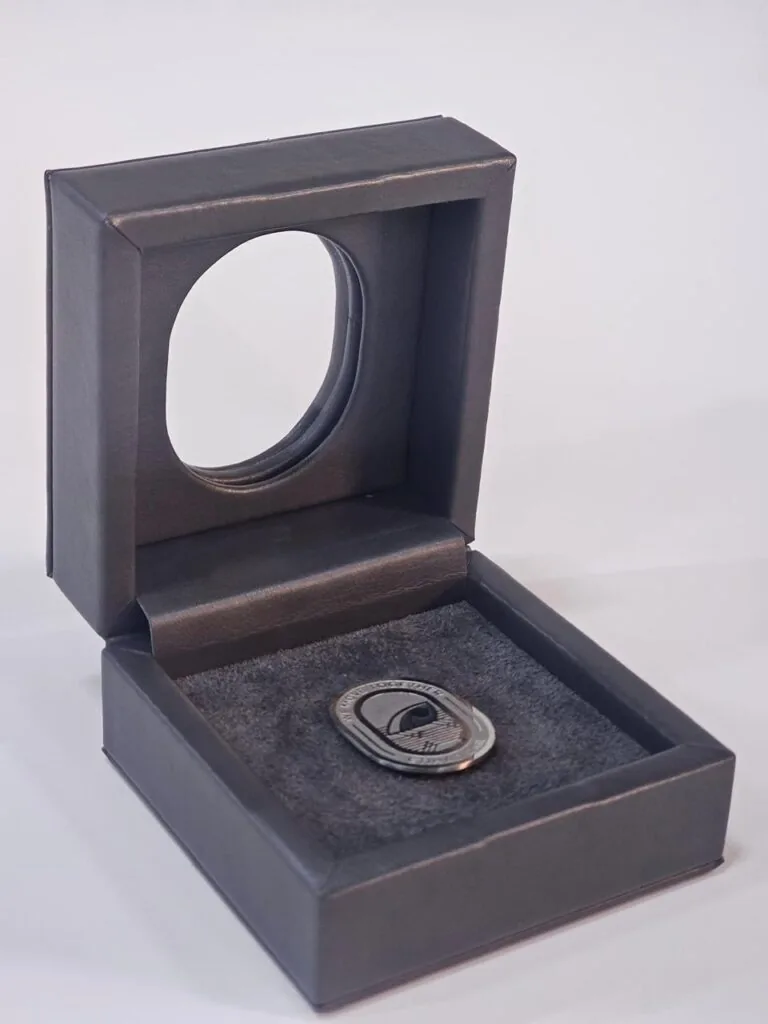

Foil sits on top of the printed sheet, so any difference between where the artwork expects the mark and where the die lands shows up straight away. Getting foil stamping to sit correctly on printed artwork is a process question before it is a design one. This is how we work through it before a run starts.
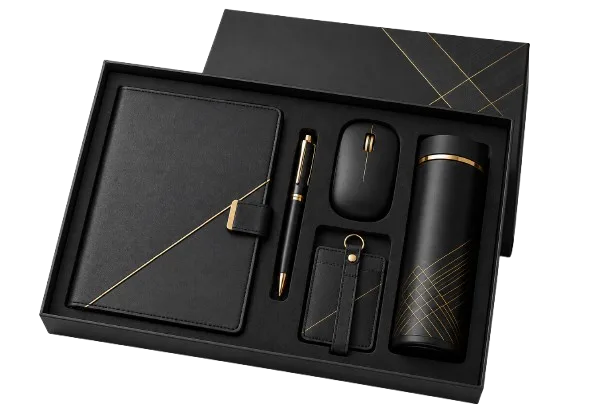
Gold foil stamping registered cleanly onto the printed brand mark of a rigid presentation box lid.
Where the drift actually comes from
Printed sheets move. Paper picks up moisture in the press room, stretches slightly through the run and changes again when it passes through lamination. Foil is applied on a separate pass with its own heated die, so it is being registered to a sheet that is no longer quite the sheet that came off the press.
That sequence explains most of the movement we see, far more often than a faulty artwork file. A clean dieline and a die cut to it will still land a fraction off if the sheet has shifted in between. We would rather agree a sensible tolerance at the start than promise a perfect line and chase it later, once the material has already been committed.
What we settle before the die is cut
First we check the artwork itself. The mark should not sit on a fold, and any keyline around it needs enough room that a small shift does not read as a mistake. Then we confirm the order of operations, because foil before lamination behaves differently from foil after it, and that decision changes how much movement we should expect.
- Whether the foil runs before or after lamination, and how that affects registration.
- How much clear space sits around the mark, so minor movement stays invisible.
- Which elements must land on print and which are decorative on their own.
- Where the grip and reference points sit on the dieline.
Scale matters too. Fine hairlines and very small type are the first details to break when registration moves, so those elements usually want a little more weight or a little more air around them. It is a small change at artwork stage that saves an argument at sample stage.
Proofing the alignment, not just the colour
A screen proof shows colour and layout. It cannot show where the heated die will land. For foil work we prefer a physical sample on the actual stock, approved before bulk production, because that sample tells us how the material reacts to heat and how much movement to expect once everything is up to temperature.
Check that sample in ordinary room light, from a few angles and from the distance a customer would hold the box. Foil that looks perfectly registered under a bright lamp can still show a hairline of ink on one side once the box is sitting on a shelf. Look at it the way it will really be seen.
Keeping print and foil on one reference
When a single supplier handles both print and foil, the handover is simple. When the work is split, we send the dieline and the approved sample to each stage so both teams work from the same reference points. Short notes help more than people expect: which side is the top, which mark is the anchor, where the trim sits.
During the run we pull sheets and check the foil against the print rather than trusting the setup from the first sheet. Materials behave differently once the press is warm, and catching a drift early avoids reprints. Once the sample is approved we hold that standard for the rest of the job.
Aligning foil to printed artwork is rarely a single fix. It comes from sensible sequencing, artwork with room to breathe and checks at the right moments, and the result is a finish that reads as part of the design rather than something applied afterwards.
The Bottom Line
Confirm every choice on a physical sample before the run starts. Tell us what you are packing, how many you need and when you need it, and our team will come back with structure options, materials and pricing within a business day.