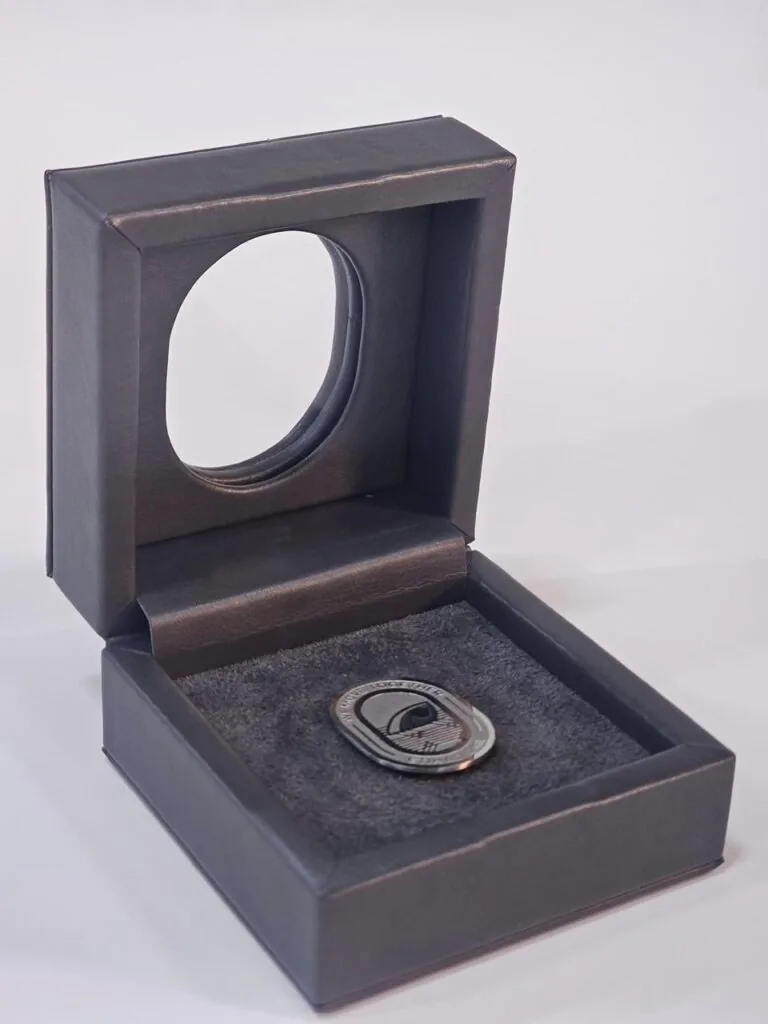

Leather and leather-effect wraps carry natural variation, and a rigid box puts several cut panels side by side where that variation is easy to see. Matching leather grain across panels starts with selection and nesting, and it is agreed before the first cut is made.
Wrapped panels checked side by side so grain and tone continue around the lid and base.
What varies from panel to panel
Real hide changes in grain density, pore pattern and tone across its surface. Even a printed synthetic repeats less often than people expect, and a large lid will expose the repeat if the panel is cut in the wrong place. Shade also shifts between rolls and between dye lots, so a re-order needs the stored roll reference rather than a written colour description.
None of that is a defect, and it is part of why leather reads as leather rather than as a printed sheet. The risk appears when several panels are cut without a plan, because two faces sitting a few centimetres apart can then differ enough to break the line of the box. Selection is therefore part of the specification, not a decision left to whoever is standing at the cutting table.
Selecting and nesting the cuts
We work from the largest visible face first and cut outward from it. Everything else is then chosen to sit with that panel rather than to suit the sheet.
- Take the lid top as the reference panel and match everything to it
- Nest sides and base so grain direction stays consistent around the box
- Keep plainer sections for the base, where variation goes unnoticed
- Avoid placing two strongly figured panels where they meet at a corner
- Record the nesting layout so the next run repeats it exactly
Nesting is where the difference is made. A careful layout uses the same area of the hide for the faces a buyer actually looks at, and pushes variation into the places nobody studies. It also keeps waste predictable, which matters when the usable area of one hide is being shared across several sizes in the same range.
Colour, edge and wrap direction
Grain matching only works if tone matches as well. Panels taken from different parts of a hide can sit close in grain yet differ in shade, so we review both qualities at once under consistent light. Edges deserve the same attention, because a wrapped panel shows its turn at the corner and the eye picks up a grain change either side of that turn immediately.
We therefore plan which way the material wraps on every face, including the gussets and the inside lip, then hold that plan on the job card so the same person or machine repeats it. That plan travels with the artwork, so a repeat order never has to reinvent the arrangement from scratch.
Agreeing tolerance before production
Natural material will never be identical everywhere, so the useful step is deciding how close is close enough. We show the buyer a sample with two or three panels together and confirm that level before bulk production, so matching leather grain is agreed rather than assumed. Once it is signed off, we keep the nesting layout and the dye lot reference with the job, so a repeat order comes back looking like the sample rather than a fresh variation of it. If we supplied the previous batch, the earlier sample can be pulled and compared against the new panels before anything is cut.
The Bottom Line
Confirm every choice on a physical sample before the run starts. Tell us what you are packing, how many you need and when you need it, and our team will come back with structure options, materials and pricing within a business day.