
The crossover point is simply the quantity where the setup cost of offset stops outweighing its cheaper unit price. It is arithmetic rather than opinion, and working it out before you order stops a short run paying for plates it will never use again.

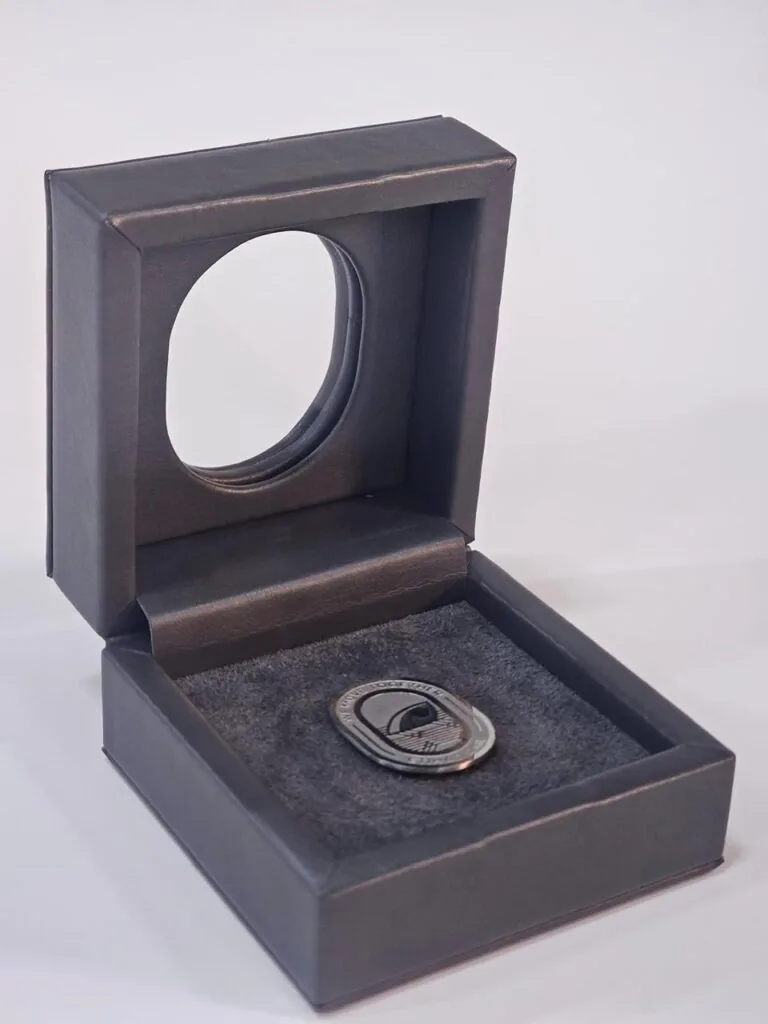
An offset plate beside printed sheets, showing the setup a short run still has to pay for.
The two costs you are comparing
Offset carries a fixed cost at the front: a plate for each colour, plus makeready time on the press. Digital has no plates, so that fixed cost is close to nothing. In exchange, offset charges less for each additional unit because the press runs at speed once it is set. The crossover sits where the total cost of both routes is the same.
Written out, the calculation is straightforward. Divide the plate and setup cost by the difference in unit price between the two processes, and the answer is the quantity at which offset becomes the cheaper route for that job. It assumes both routes print the same artwork on the same stock, which is exactly the comparison we are trying to make.
What the formula does not tell you
Unit price is not the only line worth putting on the comparison. Several practical items move the crossover point in a real quotation.
- Number of colours, since each one adds a plate
- Size of the sheet, which changes both setup and waste
- How many versions or panels print from the same file
- Whether a proof round is needed before either run starts
- Storage, if one offset delivery has to hold a whole programme
Take those into account and the theoretical line shifts, sometimes by a useful margin. This is why we run the numbers on the actual job instead of quoting a general threshold that may not apply to it. It also gives the buyer a way to check the recommendation, because the arithmetic is simple enough to repeat on their side of the table.
Coverage and timing move the line too
Heavy solid coverage can push work towards offset even at lower quantities, because offset holds flat colour more evenly across a long run. Timing pushes the other way: if the packaging is needed quickly and there is no window for plates, digital may be the sensible route even when offset would cost less per unit. Neither point is captured by the formula, which is worth remembering when a calculation looks decisive.
There is one more line that never appears in the arithmetic, which is what happens to the units left over. An offset quantity arrives as one delivery and has to be stored somewhere, and a programme that revises its artwork every few months may not use the balance before it does. A cheaper unit price only counts as a saving if those units are genuinely wanted, so we ask the storage question openly rather than letting the formula answer it.
Using the result on a real enquiry
When a buyer asks which process to use, we price both where both are viable, then show where the crossover point sits for that specific artwork, stock and quantity. An order sitting well above it goes to offset, while one sitting well below goes to digital, where it saves money and time. Close to the line, we look at coverage, timing and how likely a repeat order is before recommending one. The chosen process then goes into the stored specification so the repeat follows the same route and matches the approved sample.
The Bottom Line
Confirm every choice on a physical sample before the run starts. Tell us what you are packing, how many you need and when you need it, and our team will come back with structure options, materials and pricing within a business day.