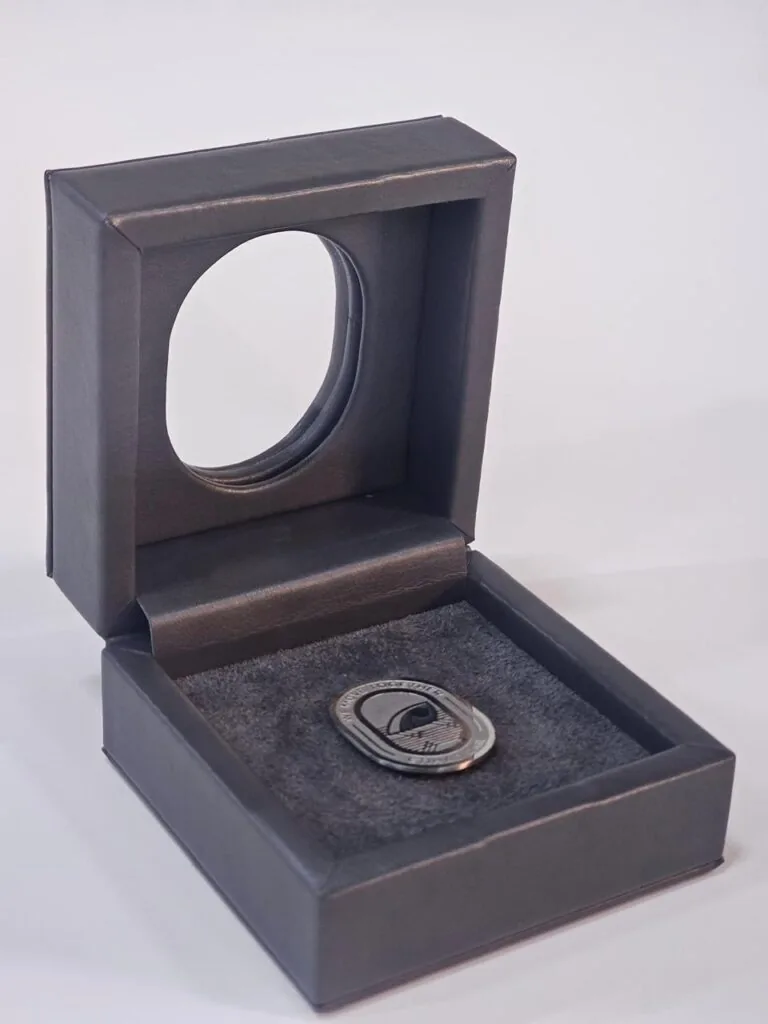

Reducing packaging cost without downgrading the brand is a structural exercise before it is a purchasing one. The savings that work are the ones a customer never sees, and they come from board, operations and print coverage rather than from taking material out at random.
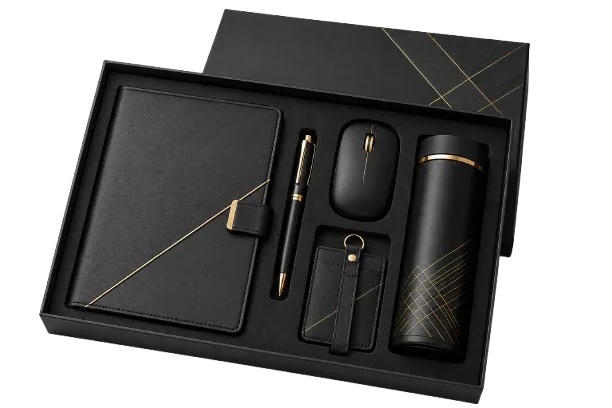
Corporate gift kit with a fitted insert, wrapped lid and printed sleeve ready for a bulk run.
Where the money sits
A rigid box is priced by three things: the board, the number of operations, and the finishing. Greyboard is the base, and stepping it down a grade saves on every unit, but only until the box stops feeling solid in the hand. Past that point the saving is noticed, and not in a good way.
Operations usually matter more than board. Every extra wrap, liner, shoulder or separate sleeve adds a setup and a hand pass on the line. The most expensive pack in a range is rarely the one with the heaviest greyboard; it is the one with the most steps in it.
Changes nobody sees
These are the first moves we suggest when a brand cannot afford to look any cheaper than it does today.
- Swap a full-colour photographic wrap for a flat colour matched to a Pantone reference. A solid field prints cleaner and uses less ink than a heavy four-colour build.
- Move the finishing from the whole lid to a single word or a small mark. One foil stamping hit in the right place reads as deliberate; a lid covered in foil reads as loud.
- Replace a moulded insert with a folded card cradle where the product allows it. A well-creased board cradle holds its shape, prints flat and ships flat.
- Cut the number of separate pieces in the set. One tray with compartments beats three loose boxes on cost, on packing time and on the bench space the recipient needs.
- Hold the outer dimensions. A size change means a new dieline, new cutting tools and new shipping cartons, and that is where an apparent saving quietly disappears.
Spot UV follows the same logic. Applied to a logo rather than a full panel, it gives the same contrast against a matt lamination at a fraction of the coverage, and it photographs exactly the same way.
Where not to save
Reducing packaging cost is easy to overdo, and the two mistakes below are where it usually goes wrong. Do not thin the greyboard below the point where the lid no longer sits flat, and do not drop the inner liner if the product depends on it to survive handling. A box that arrives scuffed or a lid that warps in storage costs more in replacement than the original saving was ever worth.
We also advise against changing the closure to save a small amount. A magnetic closure fitted too weakly feels cheap the moment it is opened, and that impression lands before the gift has even been seen.
How we put the options to you
When a client asks us about reducing packaging cost, we quote the specification exactly as it stands, then quote the two or three changes above alongside it so the effect on the unit is visible line by line. Nothing is swapped without approval from the person who owns the brand.
The sample is approved before bulk production, so the brand sees what changed rather than reading a description of it. That keeps the decision in the right hands, holding a box instead of a spreadsheet.
The Bottom Line
Confirm every choice on a physical sample before the run starts. Tell us what you are packing, how many you need and when you need it, and our team will come back with structure options, materials and pricing within a business day.