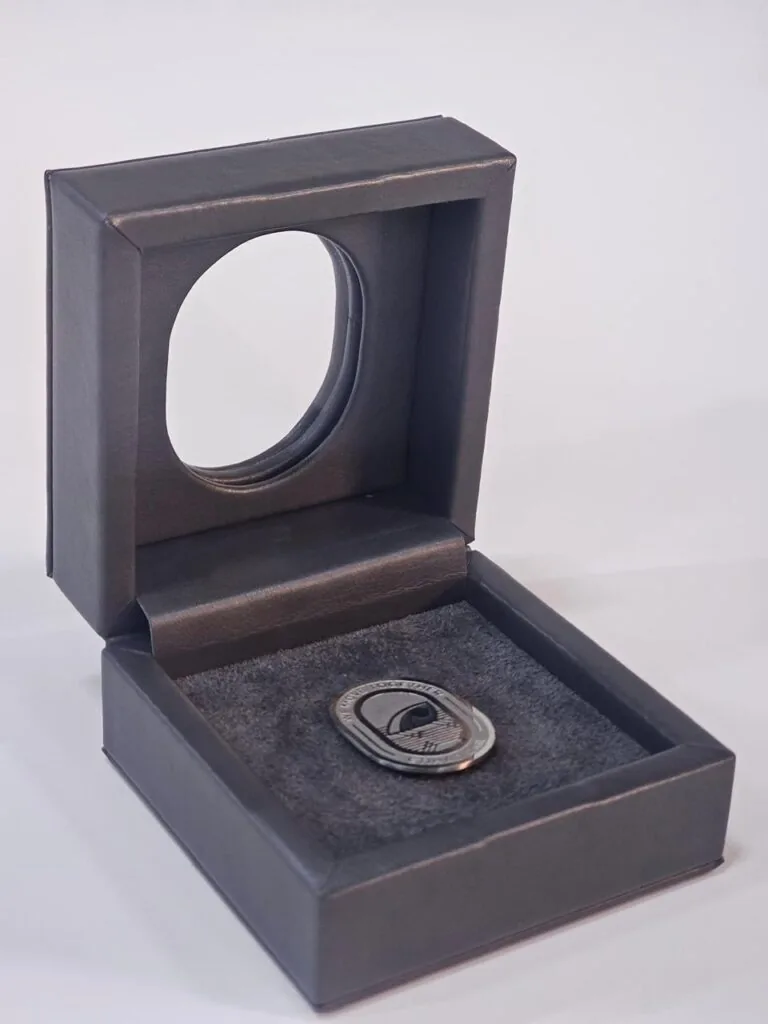

A swatch is a flat sheet, and a rigid box is not. Paper behaves differently once it turns a corner under tension, and that is where a flat sample stops telling the truth. Approving a wrapped corner sample is how we check colour, grain and finish on the part of the box a buyer actually looks at.
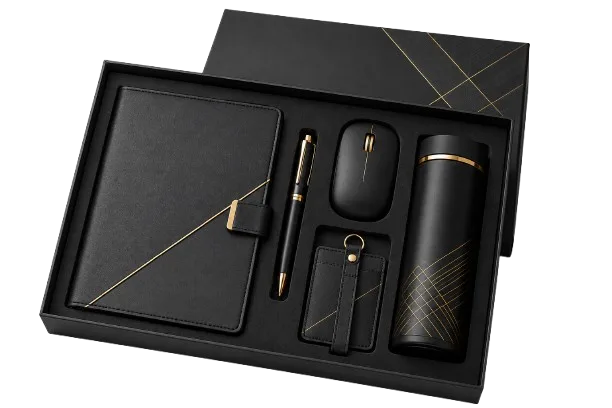
A corporate gifting kit in a rigid box, with wrapped corners turning crisp where the paper runs over the edge without splitting.
What a flat swatch does show
Swatches earn their place in the process. They show colour accurately against a reference, they show grain direction, and they let a designer compare several papers side by side in daylight. For narrowing a palette and agreeing which wrap suits the brand, a swatch is the right starting point and the cheapest one to send. The mistake is treating that starting point as the finished proof.
The trouble starts when a swatch is expected to predict the finished box. A sheet lying flat is not under tension, it is not glued over a corner, and it is not being read from the angle a customer holds the box at. Every one of those conditions changes how the surface looks, and none of them are visible on a card in an envelope.
Where the corner tells a different story
At a wrapped corner the paper stretches across the outside face and compresses on the inside. Grain direction decides whether the turn reads clean or slightly fibrous. Adhesive can telegraph through a thin stock as a faint shadow along the edge. A high-gloss film that looks flawless flat may show a soft halo where it has been pulled over the radius. The tighter the radius, the more the sheet has to give.
- Corner tension, which shows as whitening or a bruised line on dark papers.
- Reveal, the sliver of board visible where the wrap meets the edge, which has to sit even on all four sides.
- Gloss shift, where one finish reads differently across the flat face and the turned edge.
- Radius behaviour, since a tighter corner stresses the sheet and demands more of the fibre.
None of these show up on a swatch, and all of them are what a buyer notices first when a box is lifted off a shelf. The corner is where build quality becomes visible, long before anyone reads the print. It is also the part most often photographed.
How we build the sample that decides
For a rigid box we make a wrapped corner sample, or a full flat sample built with the board, wrap and finish intended for the run, before anything goes to bulk production. Board thickness, corner radius and paper weight are the production ones, because changing any of them changes the result. We read the sample under the lighting the product will sit in rather than a desk lamp, and we look at all four corners rather than the best one.
This is also where finishes get tested against each other. Foil stamping close to a corner, soft-touch lamination meeting an exposed edge, or spot UV that stops short of the turn all behave differently from the way they look on a flat card. Seeing them on a real corner settles the question in a minute, and guessing from two swatches tends to settle it wrongly.
Using swatches and samples together
The practical answer is to keep both. Swatches narrow the field early while the design is still moving, and they are quick to compare. Once board, wrap and finish are locked, we build the wrapped sample and approve that instead. Bulk production starts after it has been signed off, so the swatch acts as a filter rather than a verdict. Skipping the second step usually means finding the corner problem after the run, when correcting it is far more expensive.
The Bottom Line
Confirm every choice on a physical sample before the run starts. Tell us what you are packing, how many you need and when you need it, and our team will come back with structure options, materials and pricing within a business day.