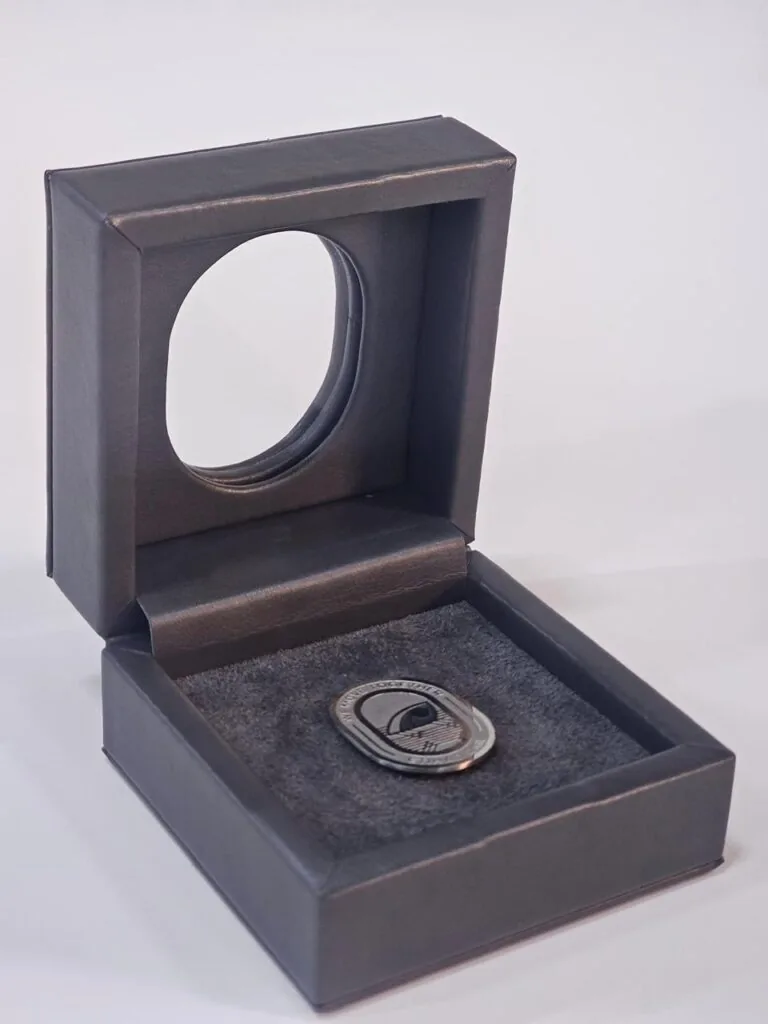

Screens flatten everything: the paper tone, the ink coverage, the way a fold catches the light. That is why we print a prototype before a full run leaves the drawing board, so colour, structure and hand can be judged in the actual material rather than in a preview. Decisions made from a first article take minutes; decisions made after production starts can take weeks to undo.
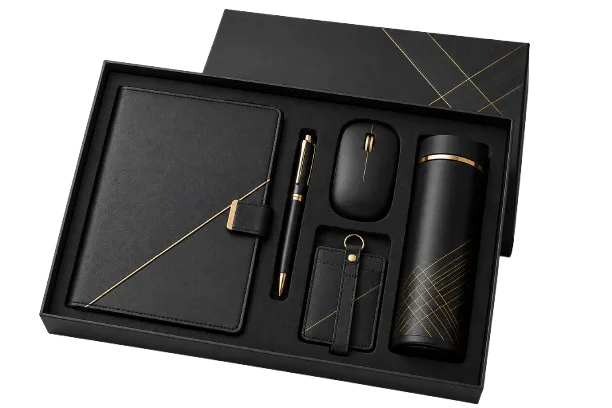
A folded prototype with printed panels used to check colour and structure before production.
What a printed prototype shows
Colour is the obvious one. A navy that looks right on a monitor can shift on uncoated stock, and a large flat panel will show dot gain that no preview predicts. The first article reveals the real density, the real white point of the paper and how the ink behaves once lamination sits over it. Small type also reads differently on paper than it does on glass.
Structure is the other half. Board thickness, the tolerance around a lid and base, the way an insert tray sits against the wall of the box all behave differently in the hand than on a dieline. A prototype exposes a tight closure or a loose insert while there is still time to move a millimetre. Correcting it later means cutting new tooling and starting the cycle again.
How we build the first article
We work from the same dieline and the same artwork production will use, then print on digital equipment so the file itself is never altered. The piece is cut, folded and finished on the bench, using the same wrap, foil and lamination options as the final order. Nothing is mocked up in a cheaper material just to save a step.
Digital proofing covers layout, but it cannot show weight. Holding the piece tells you whether the box feels right for the product inside, whether the lid drops with a controlled stop, and whether the insert holds without squeezing the contents. Those are the details a buyer notices in the first few seconds of handling.
- Colour checked against the artwork, and against a Pantone reference where a brand colour is specified.
- Fit tested between lid and base, including the closing action and any magnetic closure.
- Insert tray loaded with the real product to confirm spacing and support.
- Finish inspected under a lamp for haze, lift and handling marks.
Anything you mark up goes back into the file, and we build another prototype if the change is structural. The loop is deliberately short: a prototype exists to be argued with, not to sit in a drawer looking tidy.
What changes once the prototype is approved
The approved piece becomes the reference for the whole job. The press operator matches to it, the finisher matches to it, and the packing line checks against it. When a question comes up during the run, the answer is on the bench rather than in an email chain. That shared reference is what keeps a batch consistent from the first box to the last.
It is also how reprints get avoided. A colour problem found on a prototype costs an afternoon; the same problem found after a full quantity is wrapped costs the order. Nobody enjoys explaining that to a finance director, and nobody has to if the first article was handled properly.
When a prototype is worth the extra step
Any time the artwork is new, the structure has changed, or the box is tied to a fixed date, take the step. Gifting programmes, retail launches and event packs all sit in that group, because there is no second chance to correct the piece people receive. A new finish belongs on the same list, even when the box itself is familiar.
If you are repeating an order with no changes, the reference from the earlier run does most of the work. Even then, a sample approved before bulk production keeps both sides clear about what the finished piece should look like.
The Bottom Line
Confirm every choice on a physical sample before the run starts. Tell us what you are packing, how many you need and when you need it, and our team will come back with structure options, materials and pricing within a business day.